Can I Use a Private Doctor in Malta to Skip the Waiting List?
Waiting six months for a routine specialist appointment while your symptoms simmer in the background is a rite of passage no expat wants to experience. I remember my first year in Sliema, staring at a referral letter for a simple skin check and being told the next available slot at the public hospital was "sometime next spring." This guide explains exactly how to navigate the Maltese private sector to bypass those infamous Mater Dei waiting lists without breaking the bank.
The Reality of Waiting Lists in Maltas Public System
If you have spent any time talking to locals or fellow expats in the coffee shops of Valletta or St. Julian’s, you have undoubtedly heard stories about the waiting times at Mater Dei. The public healthcare system in Malta is, on paper, fantastic. It is world-class, technologically advanced, and, for those paying social security, essentially free at the point of use. However, the system is under immense pressure due to a rapidly growing population. This pressure manifests as a bottleneck for non-urgent consultations and elective surgeries.
Understanding Mater Dei’s Triage and Timelines
In the public system, everything is governed by urgency. If you arrive at the Emergency Department with a life-threatening condition, the care is immediate and exceptional. You can learn more about this in our guide on Emergency Medical Care in Malta: 112, A&E, and Urgent Help. However, if your condition is "chronic" or "non-urgent"—think a nagging knee injury, a suspicious but non-spreading mole, or a persistent digestive issue—you are placed on a centralized waiting list.
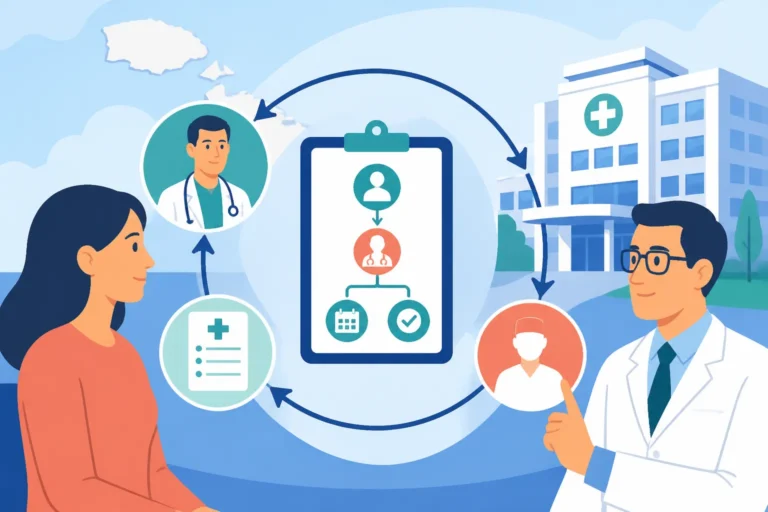
These lists are not just weeks long; they are often months or even years long for certain specialties like orthopaedics or ophthalmology. The administrative process involves a GP at a local health centre writing a referral, which is then vetted by a consultant at the hospital. You then wait for a letter in the mail. If you are a digital nomad or a frequent traveler using a plan like SafetyWing, you might find this lack of predictability particularly stressful when trying to plan your life.
When the Public System Makes Sense and When It Does Not
The public system is your best bet for heavy-duty medical needs: major trauma, oncology, and complex surgeries that require multi-day stays in intensive care. No private facility in Malta can match the sheer scale of Mater Dei and Beyond: A Guide to Malta's Public Hospitals and Health Centres.
However, for the "middle ground"—diagnostics like MRIs, ultrasounds, and initial specialist consultations—the public system can feel like a black hole. This is where the private route becomes not just an option, but a necessity for your peace of mind. Many expats choose to use private GPs for their day-to-day needs simply to avoid the long queues at government health centres. If you are unsure which path to take, you might want to read about Which Health Centre Do I Go to After Moving to Malta? to see if the public route is even viable for your current location.
Private Doctors: Your Fast Track to Medical Care
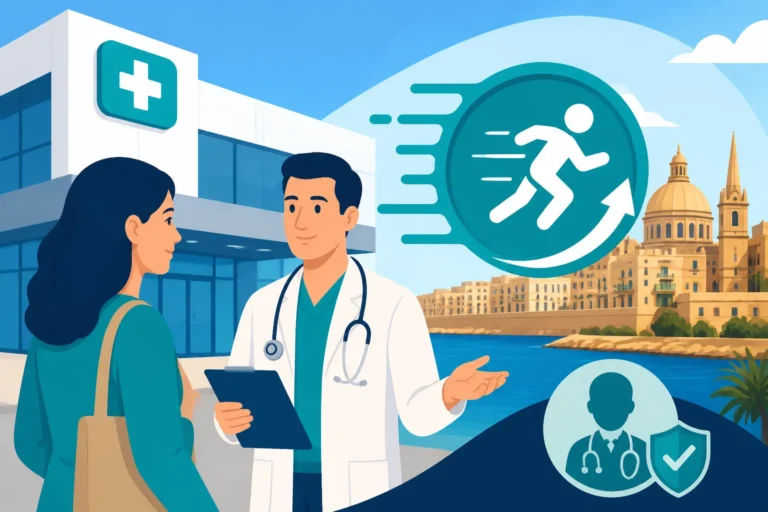
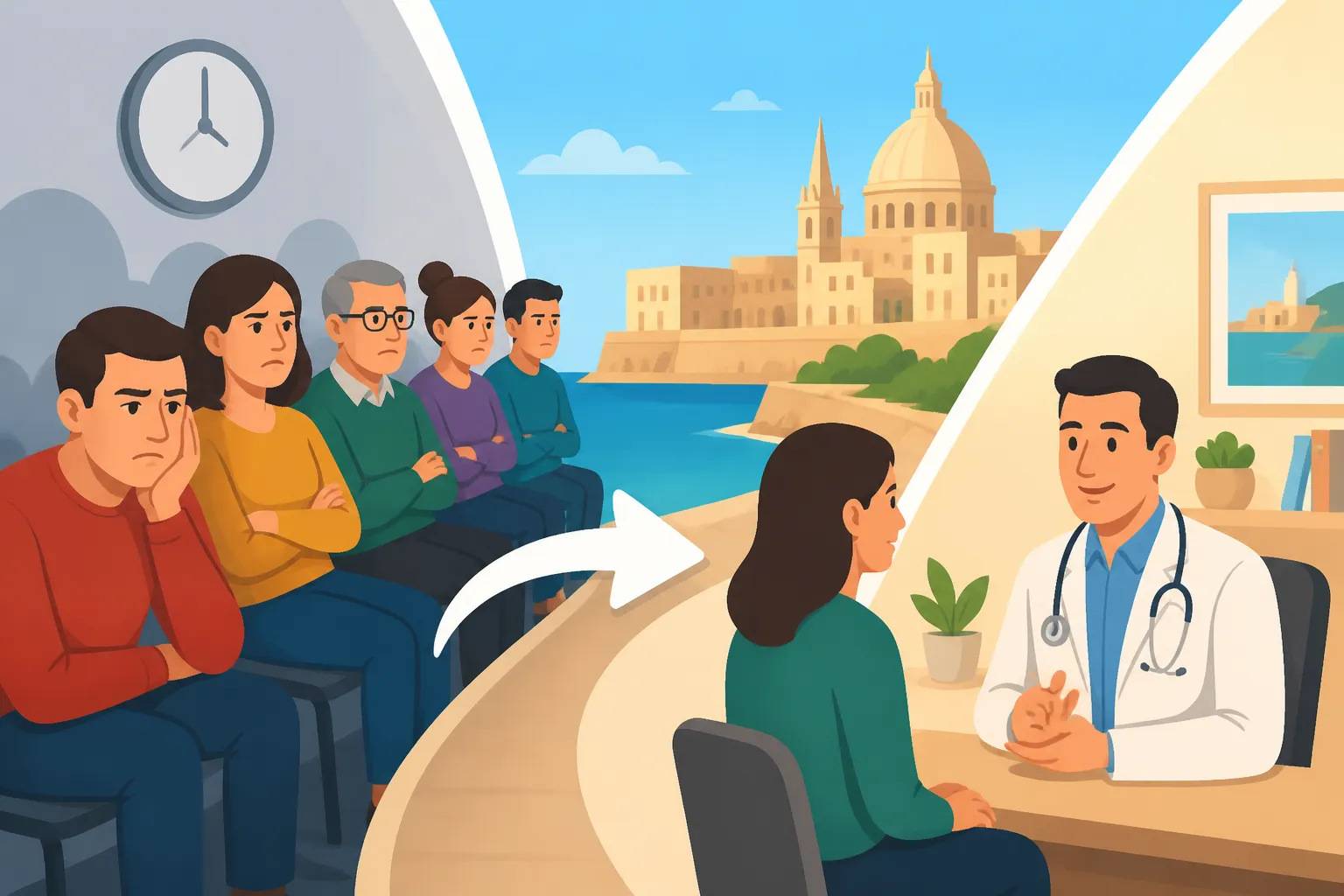
The most common question I get is, "Can I actually skip the line?" The answer is a resounding yes, but with a few nuances. In Malta, the private healthcare sector operates parallel to the public one. Most consultants who work at Mater Dei in the morning run private clinics in the afternoon or evening. By paying for a private consultation, you are essentially buying a direct ticket to that same expert’s office, usually within 24 to 48 hours.
The Pharmacy Clinic Phenomenon
One of the most unique aspects of Maltese life is the pharmacy clinic. Unlike many countries where pharmacies only dispense medicine, in Malta, almost every local pharmacy has a small consultation room in the back. These rooms are used by visiting GPs and specialists.
On any given Tuesday, you might find a cardiologist at the pharmacy in Naxxar, while a pediatrician visits the one in Marsascala. This is the ultimate "pro tip" for skipping queues. You don't always need to go to a massive hospital; you just need to walk into your local pharmacy and ask for their "doctor's schedule." This is often the fastest way of Finding a Doctor in Malta: GPs, Specialists, and the Referral System without the administrative headache of the public sector.
Private Hospitals and Specialized Clinics
If you require more than just a consultation—perhaps a minor procedure, a high-tech scan, or a comfortable overnight stay—Malta has several private hospitals like St. James Hospital or DaVinci Health. These facilities offer a level of "hotel-style" service that the public system cannot provide.
When you book through a private hospital, you are often seen by a specialist who can order an MRI or blood tests on the same floor, often on the same day. For expats who are used to efficient systems back home, this is a breath of fresh air. If you are here on a temporary basis, having a robust travel medical insurance like SafetyWing can be a lifesaver here, as it can help cover unexpected urgent visits to these private clinics that fall outside of routine maintenance.
Costs and Logistics of Private Consultations
The biggest fear for newcomers is the cost. Coming from countries with expensive private healthcare (like the US) or purely public ones (like the UK), the price of private care in Malta is surprisingly accessible. It is one of the few places where "going private" doesn't necessarily mean emptying your savings account.
Out of Pocket Prices for GPs and Specialists
For a standard GP visit at a pharmacy clinic, you can expect to pay anywhere between €15 and €30. This is usually a walk-in service, though some popular doctors require a call ahead. specialist consultations are more expensive but still reasonable, generally ranging from €60 to €100.
| Service Type | Estimated Private Cost (Out-of-Pocket) | Estimated Wait Time |
|---|---|---|
| GP Consultation | €15 – €30 | Walk-in or 24 hours |
| Specialist Consultation | €60 – €120 | 2 – 7 days |
| Ultrasound | €80 – €150 | 1 – 3 days |
| MRI Scan | €200 – €450 | 3 – 5 days |
| Routine Blood Tests | €30 – €70 | Immediate / Next day results |
These prices are often low enough that many residents simply pay cash for the convenience. However, if you are managing a long-term condition, costs can add up. You should check What Public Healthcare Costs in Malta: Free Services and Paid Extras to compare these numbers with the free (but slower) public alternatives.
The Role of Insurance and Reimbursements
While many people pay out-of-pocket for a one-off €20 GP visit, insurance becomes vital for specialist care and diagnostics. If you have Private Healthcare and Insurance in Malta: When You Need Cover, you can usually claim back the cost of specialist consultations and tests.
For those on a budget or working as digital nomads, insurance products like SafetyWing are excellent for covering "unforeseen" medical issues that require a private doctor's intervention. Most private specialists will provide you with a detailed receipt and a medical report, which you can then submit to your provider for reimbursement. Always ensure you ask for an official "tax receipt" as this is required for most insurance claims in Malta.
Navigating the Hybrid System: Public vs. Private
Many expats don't realize that you don't have to choose just one system. Malta operates on a hybrid model. You can use a private doctor to "skip the line" for the initial diagnosis and then transition back into the public system for long-term treatment or expensive surgeries.
Can Private Referrals Get You Into the Public System?
Yes, they can. If you see a specialist privately and they determine that you need a major surgery that would cost €15,000 in a private hospital, they can write a referral for you to have that surgery at Mater Dei for free (provided you are entitled to public care).
However, there is a catch: a private referral does not automatically put you at the front of the public surgery queue. You will still be triaged based on urgency. But, by seeing the consultant privately first, you skip the 4-6 month wait just to get that initial "referral for surgery" appointment. It’s a strategic way of Booking Appointments and Using myHealth Online in Malta more effectively by having a specialist already familiar with your case.
Using Private Care for Diagnostic Tests
One of the most common frustrations is being told that you need an MRI or an ultrasound, only to find the public appointment is months away. A very common tactic in Malta is to pay for the scan privately (costing roughly €200-€400 for an MRI) and then taking the results back to your public consultant.
This can shave months off your treatment plan. The public consultants at Mater Dei are perfectly happy to accept high-quality scans from private facilities like St. James or DaVinci. If you are struggling with the bureaucracy of getting scans, read our guide on How the Specialist Referral System Works in Malta's Public Hospitals to understand how to integrate your private results into your public file.
Practical Tips for Newcomers
Navigating a new medical system is stressful, especially when you are feeling unwell. I’ve learned the hard way that a little bit of local knowledge goes a long way in getting seen faster.
Finding the Right Doctor and Booking
Don't rely solely on Google Maps. While it's a start, the best way to find a specialist is to ask in local community Facebook groups or ask your local pharmacist. Pharmacists in Malta are highly trained and often act as the first point of contact for the community. They know which specialists have the best reputation and who is currently "on island" (as many specialists travel for conferences or work in Gozo).
If you are living in more remote areas, you might find that services are more limited. Check out Healthcare in Gozo: Gozo General Hospital and Inter-Island Transfers if you are based on the sister island, as the private options there are fewer than in the Northern Harbour area.
Language and Communication
One of the greatest reliefs for expats is that almost every doctor in Malta speaks perfect English. Many have trained in the UK, Ireland, or the US. You will have no trouble explaining your symptoms or understanding your treatment plan. You can read more about this in Can I See a Doctor in English in Malta? but generally, language is never a barrier in the private sector.
When you go to a private appointment, bring all your previous records. Unlike the public system, which has a centralized (though sometimes sluggish) electronic record, private clinics are often independent. Having your history on hand will save time and money on repeat tests. If you are a traveler, having your digital records accessible via a platform supported by your insurance, like SafetyWing, ensures that a new doctor in Malta can see your history instantly.
Why Private Care is a Lifestyle Choice for Expats
For many of us, the decision to use a private doctor isn't about the quality of care—it's about the quality of life. Spending four hours in a crowded waiting room at a public health centre is a drain on your time and energy. Spending 15 minutes at a scheduled appointment in a quiet private clinic allows you to get back to your work or your family.
Even if you are entitled to free care because you are Registering for Health Entitlement with the Entitlement Unit in Malta, having a "private first" mindset for diagnostics and consultations is the secret to a stress-free life in Malta. It allows you to take control of your health timeline rather than being at the mercy of an overstretched administrative system.
Whether you are here for a few months on a nomad visa or settling in for the long haul, knowing how to leverage the private sector is essential. It provides a safety net that ensures you are never truly stuck on a waiting list when it matters most. For those who move frequently, having a global plan like SafetyWing provides that extra layer of security, knowing that even if you haven't fully navigated the Maltese public "entitlement" bureaucracy yet, you can still walk into a private clinic and be treated with dignity and speed.
Disclaimer
This guide is for informational purposes only and does not constitute professional medical or legal advice. Healthcare regulations and costs in Malta are subject to change. Always consult with a qualified medical professional or the relevant Maltese health authorities (such as the Ministry for Health) for specific advice regarding your medical condition or entitlement to care.