Can I Re-register for Healthcare After Renewing My Maltese Permit?
The moment your Maltese eResidence card expires, a strange thing happens: the digital gates of the public healthcare system often slam shut, even if you’ve already submitted your renewal paperwork. I remember the sinking feeling of standing at a health centre reception, being told my entitlement had "timed out" simply because my new plastic card hadn't arrived yet. This guide explains exactly how to re-register for healthcare after renewing your permit and how to navigate the frustrating "gap" in between.
Understanding the Link Between Your Permit and Health Entitlement
It is a common misconception among newcomers that paying Social Security contributions automatically guarantees a lifetime pass to Mater Dei. In reality, the Maltese healthcare system operates on a dual-key approach. To access free care, you must be both a contributor to the system and a legal resident with a valid permit. The Entitlement Unit, which manages these rights, ties your healthcare access directly to the expiry date printed on your residence card. When that card expires, your "active" status in the public health database typically defaults to "ineligible" until you prove you have renewed your right to stay in the country.
Why Entitlement Isn't Permanent
In Malta, health entitlement is rarely a "set it and forget it" administrative task. Because the islands host a large population of third-country nationals and mobile EU citizens, the authorities use the residence permit renewal cycle as a checkpoint. They want to verify that you are still employed, still paying your Social Security Contributions and What They Fund in Malta, and still residing on the islands. For many of us, this means that every one or two years, we have to go through a mini-version of our initial registration. It feels redundant, especially when your employer has been deducting NI from your payslip without interruption, but it is a standard part of the administrative landscape here.
The Role of the eResidence Card
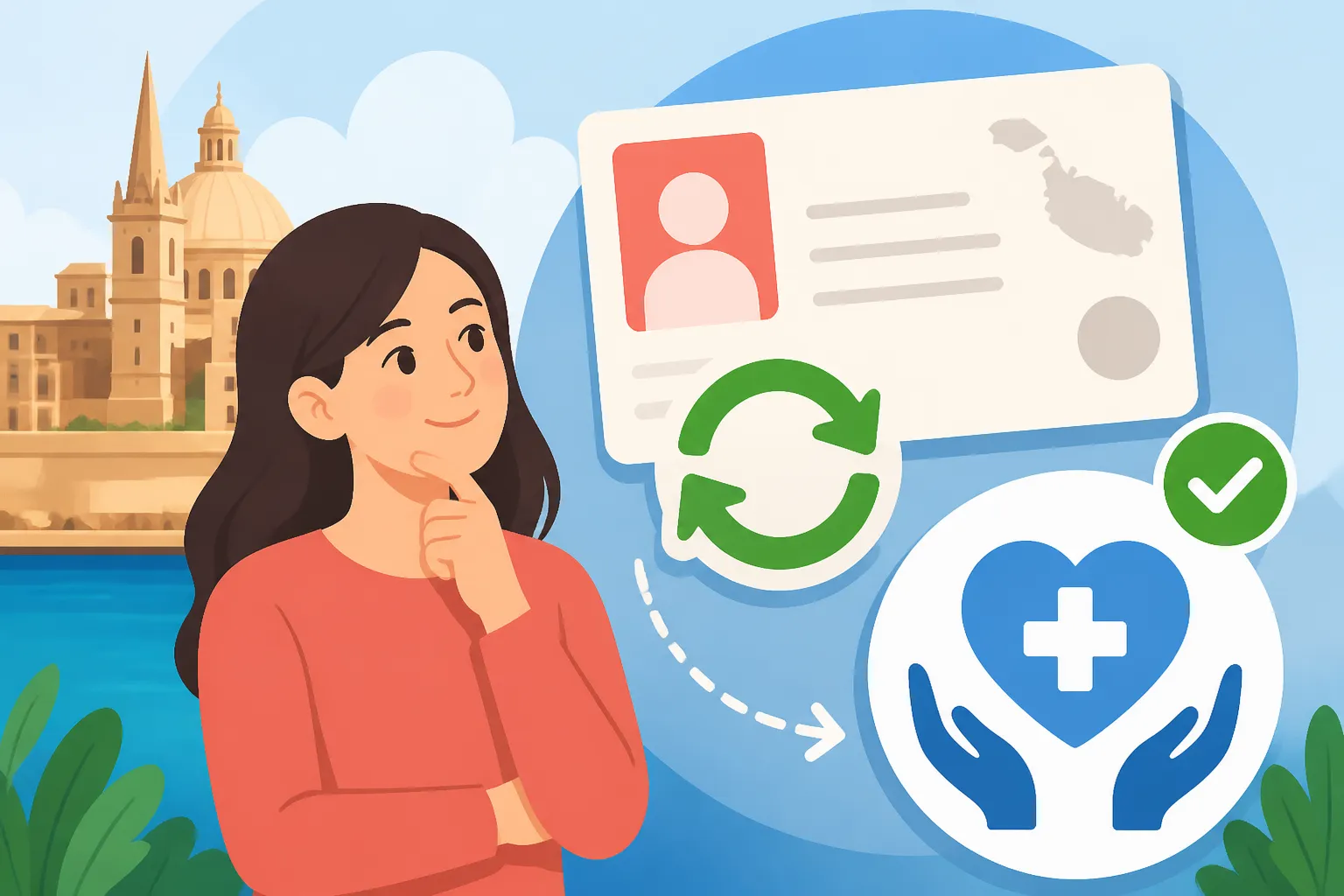
Your eResidence card is more than just an ID; it is the primary document the health centres and hospitals use to verify your status. The ID number—the seven digits followed by a letter (usually G, L, or M)—remains the same, but the "Card Expiry" is the date the system watches. When you go for a check-up or try to collect medicine, the clerk will scan your ID. If the date has passed, the system may flag you as a "paying patient." This is why Getting Your Maltese ID Card Number: The Key to Accessing Healthcare is only the first step; keeping the status associated with that number updated is a lifelong task for an expat.
Social Security vs. Residency Status
You might wonder, "If I'm still working and paying tax, why do I need to re-register?" The issue lies in the lack of real-time data sharing between the Department of Social Security, Identità (formerly Identity Malta), and the Entitlement Unit. While one department knows you’re paying in, the other doesn't know if you’re still allowed to be here. This administrative "silo" effect is a frequent source of frustration. Validating your status requires manually bridging these departments by presenting your new permit to the Entitlement Unit. Without this manual update, you might find yourself asking Do I Get Free Healthcare in Malta If I Pay Social Security? while facing a bill for a routine blood test.
The Re-registration Process Step by Step
Re-registering isn't quite as intensive as your first application, but it requires precision. You cannot simply walk into a health centre with your new card and expect the computer to automatically update. The update must happen at the Entitlement Unit level, located within the grounds of St. Luke’s Hospital in Gwardamanġa. This office is the "brain" of the healthcare access system, and they are the only ones who can issue the Certificate of Entitlement that restores your "free" status.
When to Start the Process
The ideal time to handle your re-registration is the moment you have your new physical eResidence card in hand. However, we all know that Identità can take months to process a renewal. If your card has expired but you have the "Blue Paper" (the Interim Receipt), you can sometimes obtain temporary entitlement. This is crucial if you have a chronic condition and need to keep your The POYC Pharmacy of Your Choice Scheme: How to Collect Free Medicines access active. Don't wait until you actually get sick to check your status; the Entitlement Unit can have long queues, and processing an update can take a few days to reflect in the hospital’s system.
Documents You Will Need for the Entitlement Unit
When you head to Gwardamanġa (or email them, though in-person is often faster if you’re in a rush), you need to be armed with a specific set of documents. Even for a renewal, they often want to see the "Big Three": your new residence card, your recent payslips, and sometimes a declaration from your employer.
| Document Type | Purpose | Why It Matters |
|---|---|---|
| New eResidence Card | Proof of Legal Stay | The primary trigger for updating the expiry date in the health database. |
| Recent FS3 or Payslips | Proof of Contribution | Confirms you are still actively paying Class 1 Social Security. |
| Interim Receipt (Blue Paper) | Bridging Document | Used if the physical card is delayed but the renewal is "in progress." |
| Jobsplus Engagement Form | Employment Verification | Occassionally requested to prove your job hasn't changed. |
| Passport | Identity Verification | Always keep a copy of your bio-data page ready. |
Handling the Blue Paper Phase
The "Blue Paper" phase is the purgatory of Maltese bureaucracy. It proves you’ve applied for a renewal and are legally allowed to remain in Malta, but it’s not a "final" document. Some health centres are lenient and will accept it for a one-off GP visit, but for hospital procedures or specialist referrals, they will insist on a valid Certificate of Entitlement. To get this with a Blue Paper, you must convince the Entitlement Unit that your case is urgent or that you are a continuous contributor. If you find yourself in this limbo, it’s worth asking Can I See a Doctor in Malta Before My Health Entitlement Is Approved? to understand your immediate rights at the local health centres.
Navigating the Gap: Bridging Your Coverage
One of the biggest risks during the renewal period is the "coverage gap." If you have a medical emergency while your permit is expired and your re-registration hasn't been processed, the hospital may classify you as a "Non-EU/Non-Entitled" patient. This can result in significant bills, even if you eventually get your permit and try to claim the money back later. This is where many expats choose to maintain a safety net.
Using Private Insurance Like SafetyWing
During the weeks or months when your status is "in-between," having a private policy is a lifesaver. Brands like SafetyWing offer flexible, month-to-month coverage that is specifically designed for people who live between borders or are waiting on local bureaucracy. While the Maltese system is great once you're "in," it can be cold and expensive while you're "out." Using a solution like SafetyWing ensures that if the worst happens while you’re fighting with the Entitlement Unit, you aren't paying out of pocket for private clinic visits or emergency stabilization.
Accessing Care While Your Application is Pending
If you need a doctor urgently and your entitlement is currently flagged as expired, your best bet is to visit a local Health Centre rather than the Mater Dei Emergency Room. The staff at health centres are often more accustomed to the local expat community's struggles. You might be asked to pay a small fee upfront, which is much lower than hospital rates. Always keep your receipts. If you can later prove that you were entitled to free care during that period (i.e., you were employed and your renewal was eventually backdated), you can attempt to apply for a refund, though I warn you—this is a long and paper-heavy road.
Retroactive Claims and Public Health Centres
In some cases, if you have paid for treatment while waiting for your permit, the Entitlement Unit can issue a letter confirming your eligibility was "continuous." However, this usually only happens if there was no break in your employment. If you changed jobs during the renewal, the water gets muddier. If you are confused about which facility to visit during this time, check Which Health Centre Do I Go to After Moving to Malta? to ensure you are at least in the right catchment area, as going to the wrong centre will only add more bureaucratic hurdles to your day.
Common Pitfalls and How to Avoid Them
Even with the best intentions, things go wrong. The most common mistake is assuming that "renewing the permit" and "renewing the health access" are the same thing. They are separate actions handled by separate entities. You must be proactive. Another pitfall is forgetting about your family members. If you are the primary breadwinner, your entitlement usually covers your spouse and children, but their "cards" in the health system are also tied to their specific residence permits.
Updating Your Details with myHealth
Malta has a fantastic digital portal called myHealth, which allows you to see your records and link up with a private GP. However, the myHealth portal relies on the data provided by the Entitlement Unit. If your residency status isn't updated in the central database, you might find yourself locked out of your digital records or unable to see your latest blood test results. Once you’ve finished your re-registration, make sure to verify your status by Booking Appointments and Using myHealth Online in Malta. If the portal shows you as "active," you’ve successfully cleared the hurdle.
Dealing with Dependent Permits
If you are a TCN (Third Country National) and your family is here on a Family-Member Residence Permits for Joining Someone in Malta, their healthcare is often dependent on your social security contributions. When you renew your permit, you must also ensure their details are updated at the Entitlement Unit. Often, the unit will ask for your marriage certificate or birth certificates (translated into English) all over again, even if they have them on file. It feels like "Groundhog Day," but having these documents ready in a dedicated "Malta Admin" folder will save your sanity.
Private Insurance as a Backup
Even after your re-registration is complete, many veteran expats keep a basic private policy. The public system is excellent for emergencies, but waiting lists for non-urgent specialists can be long. Having a policy like SafetyWing allows you to bypass these waits by seeing private specialists while still having the public system as a fallback for major surgeries. It’s also a requirement for many residency paths, such as the Nomad Residence Permit, so it’s often worth keeping the policy active even after your public entitlement is restored. Knowing How to Register for Health Entitlement with the Entitlement Unit in Malta is essential, but having a private backup is just smart planning.
What Public Healthcare Actually Cost in Malta
While the system is "free," it’s only free if your paperwork is perfect. If you fall into a gap, the costs can surprise you. A simple consultation at a Health Centre might be €15-€20, but a night in a hospital bed as a non-entitled patient can run into the hundreds.
| Service | Entitled Patient Cost | Non-Entitled Patient Cost (Estimated) |
|---|---|---|
| GP Visit (Health Centre) | Free | €15 – €30 |
| Emergency Room (A&E) | Free | €120 – €450+ |
| Specialist Consultation | Free | €60 – €150 |
| Basic Blood Tests | Free | €30 – €100 |
| Hospital Stay (Per Night) | Free | €250 – €600 |
As you can see, the "gap" is not something you want to experience without a plan. Whether you rely on the interim "Blue Paper" or use a temporary bridge like SafetyWing, ensuring you can answer What Public Healthcare Costs in Malta: Free Services and Paid Extras before you need care is the hallmark of a seasoned expat.
Disclaimer
This guide is based on personal experience and the administrative rules as of 2026. Maltese immigration and health entitlement policies are subject to change without notice. Always verify current requirements directly with the Entitlement Unit (Ministry for Health) or Identità before making medical or financial decisions. This content is for informational purposes only and does not constitute legal or professional medical advice.