How Do I Find Out If a Medicine Is Available in Malta?
Arriving in Malta only to find that your essential maintenance medication isn't on the pharmacy shelf is a uniquely stressful rite of passage for many expats. I still remember the sinking feeling in my stomach during my first month in St. Julian's when a pharmacist told me my specific brand of blood pressure medication "doesn't exist" on the island. This guide solves that panic by showing you exactly how to verify medication availability, navigate the national database, and find local alternatives before you run out.
Understanding the Maltese Pharmaceutical Landscape
Malta is a small island nation with a market size that often dictates what pharmaceutical companies choose to register here. Unlike larger EU countries where every brand-name drug is readily available, Malta sometimes relies on a more curated list of medicines. This doesn't mean the care is inferior, but it does mean you have to be proactive about checking for your specific needs.
Brand Names vs. Generic Equivalents
One of the first hurdles you’ll face is the nomenclature. Many expats come looking for a brand name they’ve used for a decade in the UK, US, or Germany, only to find that the brand isn't registered in Malta. However, the active ingredient—the "generic" name—is almost certainly available. In Malta, pharmacists and doctors often refer to medications by their chemical names (like Atorvastatin instead of Lipitor).
When you are preparing to check availability, your first task is to look at your current prescription and find the active ingredient. Do not just search for the shiny brand name on the box. Knowing the dosage (in milligrams or micrograms) and the delivery method (tablets, capsules, or slow-release) is vital. Maltese pharmacists are incredibly knowledgeable, but they need the chemical specifics to help you find the local equivalent.
The Role of the Medicines Authority
The Malta Medicines Authority is the gatekeeper for all pharmaceutical products entering the country. They maintain the official Register of Medicines, which is a list of every drug legally allowed to be sold or distributed in Maltese pharmacies. If a drug isn't on this list, a local pharmacy cannot simply "order it in" for you through normal channels.
It is common for certain niche medications or very new drugs to be missing from the register because the manufacturer hasn't seen a financial incentive to register it in such a small market. This is why it’s essential to consult the database early. If you are moving here as a digital nomad or on a temporary basis, you might find that while your public health entitlement is pending, having private coverage like SafetyWing can help you afford the private GP visits needed to find these alternatives.
How to Use the Malta Medicines List Database
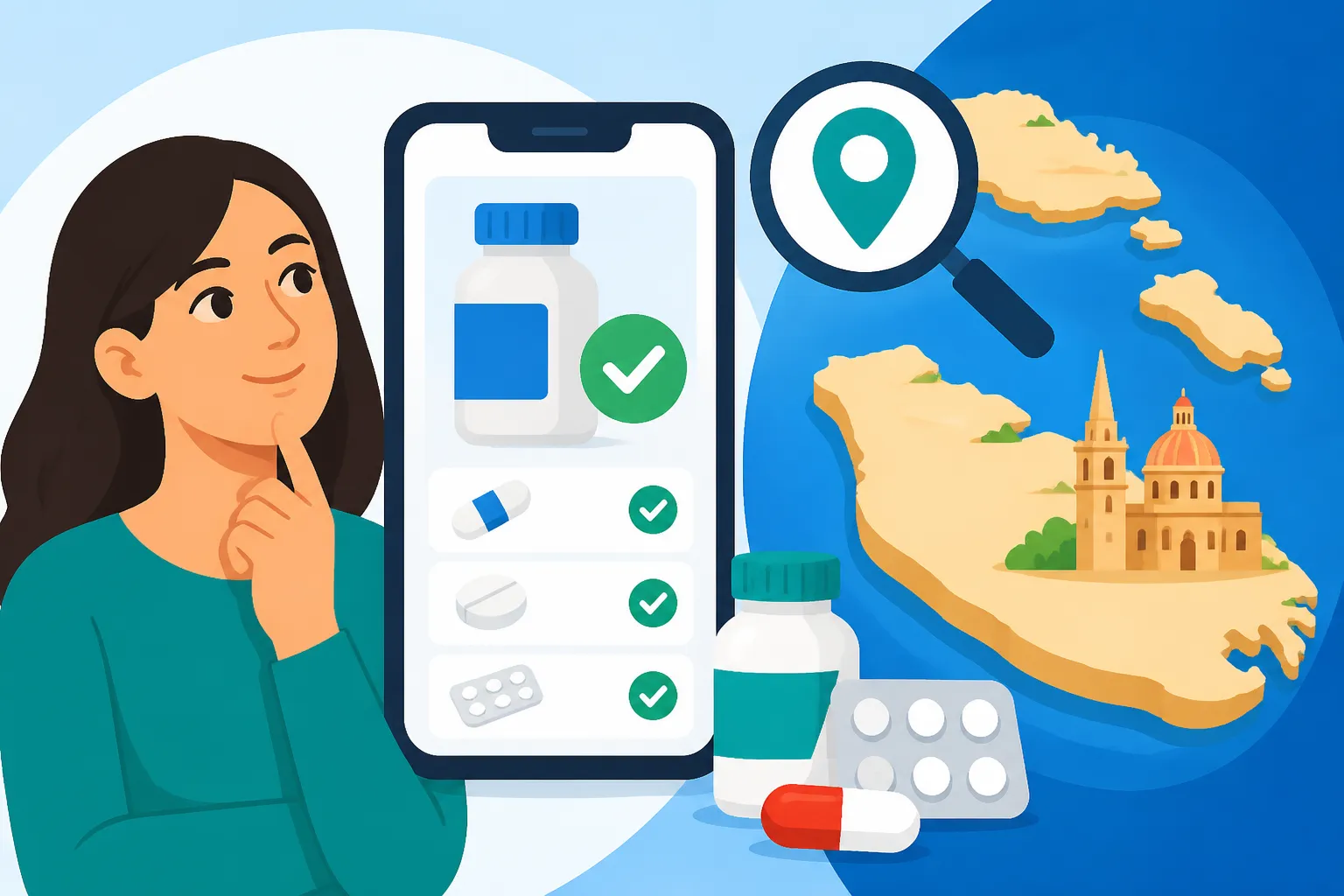
The most reliable way to find out if your medicine is available is to go straight to the source: the online Medicines Database provided by the Malta Medicines Authority. This is a public-facing tool that allows you to search by brand name, active ingredient, or even the "MA Number" if you have it.
Step-by-Step Search Tutorial
To begin your search, visit the official Medicines Authority website and locate the "Search for Medicines" section. Once there, I highly recommend using the "Active Ingredient" search field rather than the "Product Name" field. For example, if you take "Ventolin," search for "Salbutamol."
When the results populate, you will see a list of products. Pay close attention to the "Marketing Authorisation Holder" and the "Authorisation Status." If a product is listed as "Authorised," it means it is legally cleared for sale. However, "Authorised" doesn't always guarantee that every pharmacy has it in stock; it just means it is legally available in the country. If your search returns zero results for both the brand name and the active ingredient, it is a strong indicator that the medication is not currently imported into Malta.
Interpreting the Status Results
The database provides several columns of data that might look like jargon but are actually quite helpful. You will see things like "Pack Size," "Strength," and "Legal Status." The legal status tells you if a medicine is "POM" (Prescription Only Medicine) or "OTC" (Over The Counter).
Many medicines that require a prescription in Northern Europe or North America are also prescription-only in Malta. If you see your medicine listed but the status is POM, you will need to Finding a Doctor in Malta: GPs, Specialists, and the Referral System to get a local script, as pharmacies are generally not allowed to honor foreign prescriptions from outside the EU/EEA. During this transition period, using a service like SafetyWing can be useful for those who need private medical consultations to bridge the gap until their local ID card is issued.
Practical Steps When a Medicine Appears Unavailable
If your search of the database comes up empty, don't lose hope. There are several "insider" methods to securing the treatment you need, though they require a bit more administrative legwork.
Consulting with Local Pharmacists
The search database is a great tool, but the human element is often better. I recommend visiting a large, busy pharmacy (like those in Sliema, Birkirkara, or Valletta) and speaking directly with the pharmacist. They have access to wholesaler stock lists that are updated more frequently than the public database.
Pharmacists can often tell you if a medicine is "out of stock" (meaning it’s registered but there’s a temporary shortage) or "not registered." If it’s the latter, they can suggest the closest Maltese equivalent. This is where you might need to Registering with a Health Centre and Choosing a GP in Malta to discuss switching to the local version of your medication.
The Special Authorization Section 7 Route
There is a legal "back door" for medicines not registered in Malta, known as a Section 7 authorization. If a doctor can prove that a specific unregistered medication is essential for your health and that no local alternative is suitable, they can apply for a special permit to import it for you.
This process is usually handled by the hospital or a specialized importer. It is not a fast process, and it is rarely used for common ailments, but for rare chronic conditions, it is a lifesaver. You should check Managing a Chronic Condition in Malta: Schedule V Medicines and Care to see how the government handles long-term illness medications.
Comparing Private Purchase vs. Public Entitlement
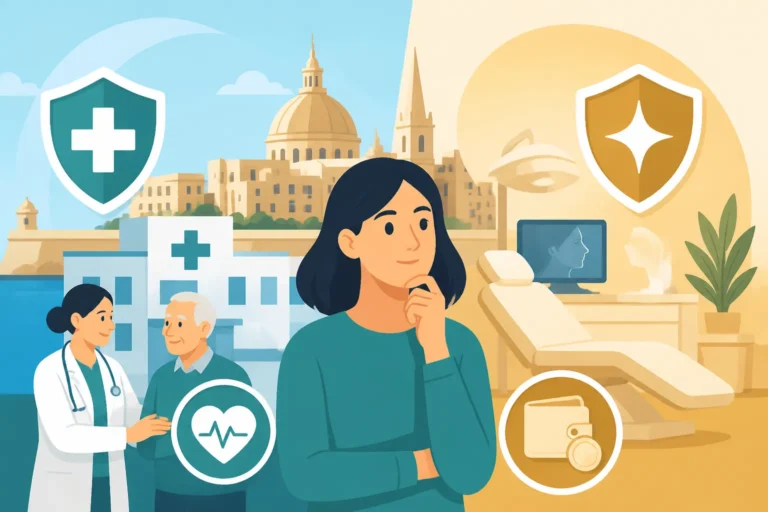
In Malta, how you get your medicine depends heavily on your residency status and whether you contribute to social security. There is a dual system: the private market (where you pay at the pharmacy) and the public system (where you get it for free if you qualify).
Out-of-Pocket Costs and Pharmacies
If you are buying medicine privately, you will be surprised at the price differences. Some generic medications are incredibly cheap, while branded imports can be quite pricey. Most pharmacies are open during standard retail hours, but there is always a roster for those that stay open on Sundays and public holidays. You can check Do Maltese Pharmacies Open on Sundays and Public Holidays? for the rotating schedule.
For those on a Healthcare on a Visa-Based Permit in Malta: Nomads, Retirees, and Investors, the private route is often the only option initially. SafetyWing is a common choice for these individuals to ensure they have access to private doctors who can write these initial prescriptions.
| Service Feature | Private Pharmacy | Public POYC Scheme |
|---|---|---|
| Cost | Full price paid by patient | Free for eligible residents |
| Availability | Wider range of brand names | Limited to the "Government Formulary" |
| Prescription | Private or Public GP script | Only "Pink" or "Yellow" hospital scripts |
| Wait Time | Immediate (if in stock) | May involve registration wait times |
| Location | Almost any local pharmacy | Specific "Pharmacy of Your Choice" |
Important Considerations for New Arrivals
If you are in the process of moving, do not leave your medication availability to chance until the day you arrive. There are several things you can do while still in your home country to make the transition smoother.
Bringing Medication from Abroad
You are generally allowed to bring a 90-day supply of your personal medication into Malta, provided you have a copy of your prescription and a letter from your doctor. This "buffer" is vital because it can take several weeks to get your Getting Your Maltese ID Card Number: The Key to Accessing Healthcare, which is the key to everything else.
Newcomers are often advised to read Can I Bring My Regular Medication into Malta from Abroad? before they pack their bags. Having that three-month cushion gives you the time to search the local database, find a GP, and navigate any potential shortages without the stress of running out of pills.
The Importance of Having Health Coverage
Navigating the search for medicine is much easier when you have professional medical guidance. If you find your medicine isn't available, you'll need to see a specialist to find an alternative. For digital nomads and those not yet paying social security in Malta, Private Healthcare and Insurance in Malta: When You Need Cover is a necessity.
Using a provider like SafetyWing can offer peace of mind during these first few months. If you need to see a private specialist because the public waiting list is too long for your initial consultation, your insurance can help cover those costs. SafetyWing is particularly popular with the expat community because it understands the nomadic lifestyle and the need for flexible coverage while settling into a new country like Malta.
What to Do in an Urgent Medication Shortage
Sometimes, a medicine is registered and usually available, but a "stock-out" occurs. This is a common frustration in Malta due to global supply chain issues and our small market priority. If your pharmacy says they are out of stock, do not just give up.
First, call other pharmacies in different towns. Stock isn't always distributed evenly. A pharmacy in a quiet village like Mellieħa might have what a busy Sliema pharmacy has sold out of. Second, ask the pharmacist if there is an alternative brand of the same active ingredient. Most of the time, the shortage only affects one specific manufacturer.
If you are part of the free medicine scheme, you should read The POYC Pharmacy of Your Choice Scheme: How to Collect Free Medicines and How Do I Collect My Free Medicines Under the POYC Scheme? to understand how to handle shortages within the public system. Often, the government will authorize a temporary substitute if the primary formulary drug is unavailable.
Finally, ensure you know the difference between the various entitlement levels. If your condition is chronic, you might be eligible for the "Yellow Card" or "Pink Card" schemes. You can find more details on this in the guide on What Is the Schedule V (Pink Card) Scheme in Malta? or check Which Medicines Are Free Under Malta's Entitlement Schemes? to see if your specific medication is covered by the state.
Disclaimer
The information provided in this guide is for educational and informational purposes only and does not constitute medical or legal advice. Pharmaceutical availability and government regulations in Malta can change frequently. Always consult with a qualified healthcare professional or the Malta Medicines Authority for the most current information regarding your specific health needs and medication requirements.