Social Security Class 1 and Class 2 Contributions in Malta
Navigating the administrative maze of Malta is a rite of passage for every expat, and few things are more confusing than the social security system. While you might expect a simple tax deduction, the reality involves complex categories, shifting rates, and specific deadlines that can leave you with unexpected bills. This guide breaks down exactly how Class 1 and Class 2 contributions work so you can secure your healthcare and pension rights without the stress.
Understanding the Core Framework of Maltese Social Security
When you first land in Malta and start looking at your finances, you will likely hear the term "National Insurance" or "NI" used interchangeably with social security. In Malta, this system is the backbone of the welfare state. It is not just a tax that disappears into a black hole; it is a direct contribution that grants you access to the public health system, sickness benefits, and eventually, a pension. The system is split primarily into two "Classes" based on your employment status. If you are an employee, you fall under Class 1. If you are working for yourself, you are in Class 2.
The Philosophical Shift for Expats
For many of us who moved from countries with vastly different tax structures, the Maltese system can feel surprisingly rigid yet oddly flexible once you know the "hacks." I remember the first time I looked at a Maltese payslip and saw the deduction labeled "SSC." I assumed it was a flat fee, but it is actually a percentage-based system with a ceiling. Understanding How Maltese Health Entitlement Fits with Social Security Contributions is the first step in realizing that these payments are essentially your membership fee to live and thrive on the island.
Class 1 vs Class 2: The Basic Split
Class 1 contributions are paid by people who are employed under a contract of service. In this scenario, the responsibility is shared between you and your employer. Class 2 contributions, on the other hand, are for those who earn income from a trade, profession, or even from investments if they aren't employed elsewhere. If you are a digital nomad or a freelancer, this is likely where you will land. It is often wise for newcomers to use a service like Wise to manage their initial transfers and see exactly how much they are setting aside for these localized costs, as the exchange rates from traditional banks can eat into your "tax budget" before you even pay the government.
Why the Distinction Matters for Your Future
The class you pay into determines the specific benefits you can claim. While both classes generally contribute toward a state pension, the nuances of Sickness Benefit in Malta: Your Rights When You Can't Work can vary depending on your contribution history. For instance, employees often have an easier time proving their "stamps" (as the locals call weekly contributions) because the employer handles the paperwork. As a self-employed person in Class 2, the burden of proof—and the burden of on-time payment—rests entirely on your shoulders. If you miss a payment window, you might find yourself temporarily ineligible for free healthcare at Mater Dei.
Class 1 Contributions for Employees
If you have signed an employment contract with a Maltese company—whether it’s a big iGaming firm in Sliema or a boutique agency in Valletta—you are a Class 1 contributor. This is generally the "easiest" path for an expat because the Final Settlement System (FSS) ensures that your social security and income tax are deducted at source. You don’t have to manually send money to the Commissioner for Revenue every month; your employer does it for you.
The 10% Rule and the Yearly Ceiling
For most employees, the social security contribution is roughly 10% of your basic weekly wage. However, it isn't an infinite 10%. There is a "ceiling" or a maximum amount you pay per week. This means that if you are a high earner, your social security contribution will eventually flatline, even as your salary increases. Your employer also matches this 10% contribution. This "employer share" is a hidden cost of hiring in Malta, which is why How Salaries Compare Across Sectors in Malta often reflects the total cost of employment. It is vital to check your monthly payslip to ensure the "NI" column is being populated correctly, as these are the records the government uses to calculate your future pension.
Part-Time Work and Pro-Rata Contributions
Malta has a specific rule for part-time workers. If you are working less than 40 hours a week, your social security might be calculated pro-rata. However, there is a minimum contribution required to "earn your stamp" for that week. If your earnings are very low, you might still have to pay a minimum amount to ensure you are covered for healthcare. This is a common pitfall for students or those on a Student Residence Permits for Malta: Requirements and Renewal who decide to take up 20 hours of work. If you aren't paying enough into the system, you might not be automatically entitled to the full range of public health services.
The Role of the FS3 Form
At the end of every year, your employer is legally obligated to give you an FS3 form. This document is gold. It lists your total earnings and exactly how much social security you paid throughout the year. Do not lose this. If you ever need to prove your Health Entitlement in Malta: How Social Security Contributions Unlock Free Care, the Entitlement Unit at St Luke's Hospital will likely ask for your recent FS3s. I keep a digital folder of mine because when you eventually apply for long-term residence, these forms prove you haven't been a "burden" on the state.
Class 2 Contributions for the Self-Employed
Now, if you are like many expats who prefer the freedom of freelancing or running a small business, welcome to the world of Class 2. This is significantly more "manual" than Class 1. You are essentially acting as both the employer and the employee, meaning you pay a higher rate overall than a Class 1 employee does individually, though it's often comparable to the combined employer/employee share of Class 1.
Calculating Your Brackets (SA, SB, SC)
Class 2 contributions are divided into categories based on your income from the previous year. If you are a new arrival, you will typically start on the lowest bracket until your first tax return is filed.
- Category SA: For those with a lower annual income.
- Category SB: The middle tier for established freelancers.
- Category SC: The higher tier for successful business owners.
The rates change slightly every year, usually announced during the October budget. It is a good idea to consult with a specialist firm like Taxes for Expats to ensure you aren't overpaying or, worse, underpaying and accruing penalties. Paying into the wrong category can lead to a nightmare of paperwork at the Social Security department in Ħamrun.
The Three-Payment Schedule
Unlike employees who pay monthly, self-employed people in Malta pay their social security three times a year:
- April: Covering January to April.
- August: Covering May to August.
- December: Covering September to December.
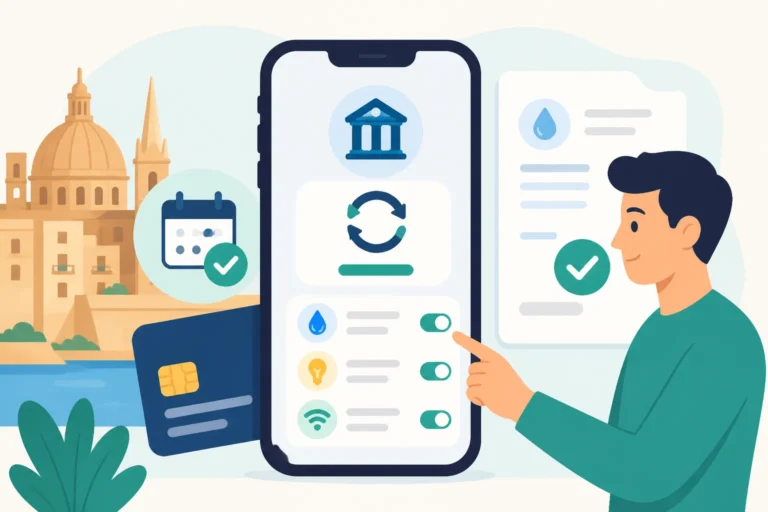
I highly recommend setting a calendar alert for these. If you miss the December 31st deadline, the interest starts accruing immediately. Many expats use Wise to set up these transfers directly to the Commissioner for Revenue’s bank account. It’s fast and gives you a clear receipt for your records. Failing to stay on top of this is one of the quickest ways to run into trouble when Registering as Self-Employed with Jobsplus and the CFR in Malta.
Social Security for Non-Working Residents
There is a sub-category of Class 2 for people who are not "gainfully occupied" but are still residents. This might apply if you are living off savings or rental income from abroad. You might still be required to pay "Class 2" contributions to maintain your right to healthcare. This is a grey area that often catches retirees off guard. If you are in Malta on a Health & Medical Pillar: Healthcare on a Visa-Based Permit in Malta: Nomads, Retirees, and Investors, you need to be very clear on whether your permit requires private insurance or if you can "buy into" the state system via these contributions.
Comparing Class 1 and Class 2 Contributions
To help you visualize the differences, here is a breakdown of how the two classes compare in terms of practical management and obligations.
| Feature | Class 1 (Employees) | Class 2 (Self-Employed) |
|---|---|---|
| Responsibility | Employer deducts and pays | You must calculate and pay |
| Frequency | Monthly (via payslip) | Every 4 months (Apr, Aug, Dec) |
| Cost Basis | Percentage of weekly wage | Annual income brackets |
| Employer Match | Yes (Employer pays 10%) | No (You pay the full rate) |
| Proof of Payment | FS3 Form | Receipt from CFR / Tax Return |
| Healthcare Access | Automatic via FSS | Active once payments are registered |
Benefits Linked to Your Contributions
The reason we obsess over these "stamps" is because they are the key to the Maltese social safety net. In many countries, healthcare is funded by general taxation. In Malta, it is specifically linked to your social security record. If your record shows a gap, you might receive a bill for your stay at Mater Dei Hospital.
Accessing the Public Health System
The moment you start paying social security, you should visit the Entitlement Unit. They will check your Social Security Class 1 and Class 2 Contributions in Malta record and issue you an entitlement letter. This letter is what allows you to Registering with a Health Centre and Choosing a GP in Malta. Without it, you are essentially a private patient. Expats often wait until they are sick to figure this out, which is a recipe for a stressful afternoon of trying to find an open government office while running a fever.
Sickness and Injury Benefits
If you are an employee and you get sick, you are usually entitled to a certain number of days of paid sick leave from your employer. After that, the social security system kicks in. For the self-employed, there is no "employer" to pay those first few days. You rely entirely on the state benefit. This is why having a solid history of Sickness Benefit in Malta: Your Rights When You Can't Work is crucial. The department will look at how many contributions you paid in the previous two years to determine if you qualify for a weekly check while you recover.
The Long Game: The State Pension
Even if you only plan to stay in Malta for five or ten years, your contributions aren't wasted. Malta has bilateral agreements with many countries, including the UK and most EU nations. This means your "Maltese stamps" can often be added to your total contribution count in your home country. For US citizens, working with Taxes for Expats is essential here, as the US-Malta Totalization Agreement ensures you don't pay social security twice on the same income and that your time in Malta counts toward your Social Security credits back home.
Administrative Realities and Common Pitfalls
Malta is a beautiful island, but its bureaucracy can be… let's call it "traditional." Dealing with the Social Security Department requires patience, the right documents, and often, a physical visit to an office.
Getting Your Social Security Number
You cannot pay into the system without a social security number. For many expats, this is the first hurdle. You usually apply for this online or at a "Servizz.gov" hub. You will need your Getting Your Maltese ID Card Number: The Key to Accessing Healthcare first. Once you have that ID number, you can apply for the SSN. Do this in your first week. Do not wait for your first payday, as your employer will be unable to process your salary correctly without it, leading to a "emergency tax" rate that can be as high as 35%.
The Danger of Back-Payments
If you've been living in Malta for a year and haven't registered for social security, the government won't just ignore it. They will eventually catch up with you, usually when you try to renew your residence permit. They will then hit you with a bill for "back-payments" plus interest. Some people are handed bills for €3,000 or more because they thought they could just "opt-out" of the system. There is no opting out if you are working. Staying compliant from day one is the only way to avoid the wrath of the Commissioner for Revenue.
Using Technology to Stay Organized
Because the Maltese system is so dependent on proof of payment, I recommend using a dedicated account for all "government money." I use Wise to hold my tax and social security reserves in a separate "jar" or balance. This ensures that when the April payment for Class 2 rolls around, the money is there, and I’m not tempted to spend it on a weekend trip to Sicily. Additionally, keep scans of every receipt. The Maltese digital system is improving, but having a paper trail is still the ultimate "get out of jail free" card when a clerk tells you they have no record of your August payment.
Seeking Professional Advice
If your situation is complex—perhaps you are an employee in Malta but also have a rental property in Germany, or you are a digital nomad working for a US company—do not try to "guess" your social security category. The rules around Do I Pay Social Security as a Self-Employed Person in Malta? change if you are already paying into another EU system. This is where professional tax advisors come in. They can help you navigate the "S1 form" or "A1 form" requirements which might exempt you from paying in Malta if you are already covered elsewhere.
Special Considerations for Newcomers
If you are in your first six months on the island, you are in a "probationary" period for social security. Most benefits require a minimum of 26 or 50 weeks of contributions before they become active. This is why many expats choose to maintain Private Healthcare and Insurance in Malta: When You Need Cover during their first year. It acts as a safety net while your "stamps" accumulate in the government system. Once you have a full year of Class 1 or Class 2 payments under your belt, you can breathe a little easier knowing you are fully integrated into the Maltese welfare state.
Disclaimer
This guide is intended for informational purposes only and does not constitute legal, financial, or professional tax advice. Social security rates, brackets, and regulations in Malta are subject to change by the government. Always consult with the Department of Social Security, the Commissioner for Revenue, or a qualified tax professional to confirm your specific obligations and entitlements.