Eye Care and Opticians in Malta: Exams, Glasses, and Costs
Navigating the Maltese healthcare system for something as specific as vision can be surprisingly confusing when you are used to a different setup back home. I remember wandering around Valletta for three hours trying to find a place that could repair a hinge on my frames, only to realize the "public" route I was looking for didn't really exist for basic optometry. This guide solves the mystery of eye care in Malta, from booking your first exam to understanding where the state system ends and private care begins.
Understanding the Eye Care Landscape in Malta
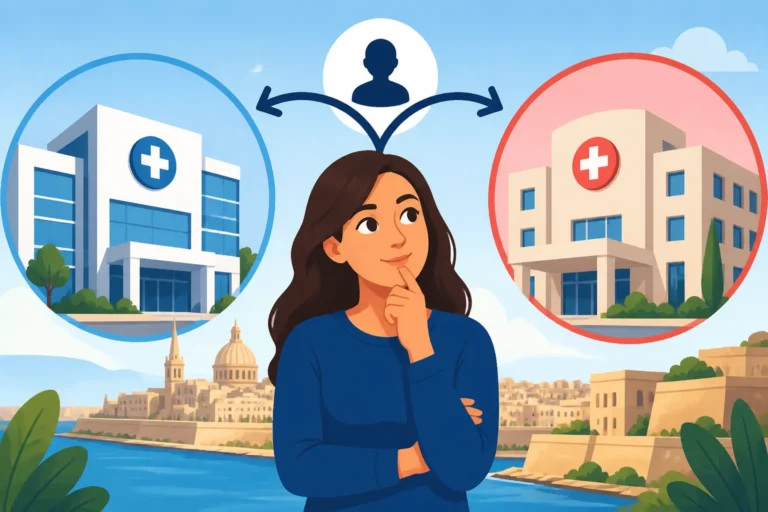
The first thing you need to realize about eye care in Malta is the very clear distinction between "optometry" and "ophthalmology." In many countries, these terms are used somewhat interchangeably by the public, but here, they dictate which building you enter and who pays the bill. For the vast majority of expats and tourists, your journey will start and likely end in the private sector. Opticians, or optometrists, are found in high-street shops across the islands, from the busy hubs of Sliema and St. Julian's to smaller villages like Naxxar or Marsaxlokk. These professionals handle vision tests, prescriptions for glasses, and contact lens fittings.
If you are looking for Healthcare in Malta for Foreign Residents: The Complete System Guide (2027), you will find that the public system, centered around the massive Mater Dei Hospital, is primarily reserved for medical eye conditions rather than routine vision correction. If you have a cataract, glaucoma, or a detached retina, the state system is world-class. However, if you simply can't read the menu at a local pastizzeria anymore, the state expects you to visit a private optician. This can be a shock for those coming from countries where basic eye exams are subsidized or free under national insurance.
For digital nomads or those still waiting on their paperwork, having a plan like SafetyWing can be a lifesaver. While routine glasses aren't usually covered by travel medical insurance, SafetyWing provides the peace of mind needed if an eye infection or an accidental injury occurs while you are navigating the limestone-dusty streets of Gzira. It bridges the gap while you are still figuring out How Malta's Public Healthcare Works: Entitlement, Contributions, and Costs. Many newcomers struggle with eye irritation due to the high salt content in the air and the constant construction dust; having professional medical access from day one is essential.
Private Opticians vs. Public Healthcare
Private opticians in Malta operate much like retail stores. You walk in, book an appointment (often for the same day or the following week), and pay a fee for the consultation. Most major towns have at least two or three competing shops. Names like Vision Opticians, O'Hea Opticians, and Tuccis are common. These shops are modern, well-equipped, and almost always staffed by English-speaking professionals. The level of service is generally very high because they are competing for your business in a relatively small market.
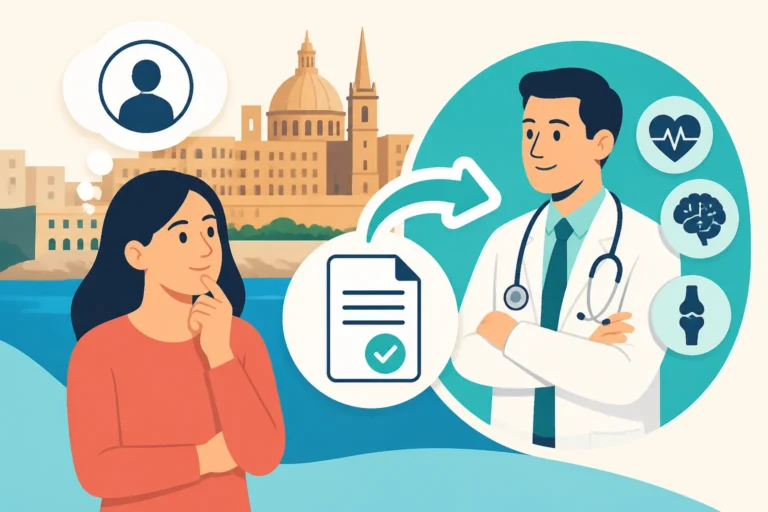
In contrast, the public route is accessed via your local Health Centre. To get an appointment with a state-employed ophthalmologist, you typically need a referral from a GP. If you are already Registering with a Health Centre and Choosing a GP in Malta, you can discuss any medical eye concerns with them. They will then place you on a waiting list for a specialist. It is important to note that you will not be referred to Mater Dei just for a new pair of reading glasses. The public system focuses on pathology and surgery, leaving the "retail" side of vision to the private market.
The Role of the Ophthalmologist vs. the Optometrist
In Malta, an optometrist is the person you see at the shop for your prescription. They are highly trained to measure your vision and detect early signs of eye disease. If they see something concerning, such as high intraocular pressure, they will advise you to see an ophthalmologist. An ophthalmologist is a medical doctor who specializes in eye surgery and complex diseases. Many ophthalmologists in Malta run their own private clinics in the evenings while working at Mater Dei during the day.
When I first arrived, I made the mistake of trying to book an "eye doctor" for a simple contact lens check. I ended up in a private hospital paying specialist rates when a high-street optometrist could have done the job for a fraction of the cost. Unless you have a known medical condition, always start with an optometrist at an optical shop. They are the gatekeepers of eye care here and will tell you if your situation requires a more clinical intervention.
Where to Go for Emergencies
Eye emergencies can happen easily in Malta—a splash of sea water, a bit of grit from a construction site, or a sudden "floater" in your vision. If the emergency is acute, you should head to the Accident and Emergency department at Mater Dei Hospital. They have specialized eye doctors on call. For more information on this, check out Emergency Medical Care in Malta: 112, A&E, and Urgent Help. If the situation is less "life or limb" but still urgent, some larger private clinics like St. James Hospital offer urgent eye consultations for a fee.
For those on a Nomad Residence Permit or traveling, SafetyWing is a great fallback for these "sudden" issues. If you wake up with a severe eye infection, you can visit a private GP or a specialist and often claim the costs back, which is much faster than waiting in the A&E at Mater Dei on a busy Saturday night. Always remember that the public emergency services are free for residents, but if your status is still "in-between," you may be billed later if you don't have the right entitlement.
How to Book an Eye Exam in Malta
Booking an eye exam is perhaps the easiest administrative task you will face in Malta. Unlike the months-long wait for an ID card or a bank account, you can usually get your eyes tested within 48 hours. Most opticians allow you to book via phone, and many of the larger chains now have online booking portals. When you call, simply ask for an "eye test" or a "refraction." If you wear contact lenses, specify that you need a "contact lens fitting" as this often requires a longer slot and a slightly higher fee.
It is advisable to choose an optician close to where you live or work. The traffic in Malta can make a simple 20-minute drive to a "better" shop turn into a two-hour ordeal. Whether you are in the North, South, or Central region, the standard of equipment is remarkably consistent. Most shops use the latest digital retinal imaging and computerized refraction systems. You will find that the experience is very professional and follows international standards.
If you are a resident and prefer to use the public system for a medical check-up, you must first understand How Do I Get a Referral to a Specialist in Malta?. This involves visiting your GP at the Health Centre, who will then log your request into the national system. You will eventually receive a letter in the mail with your appointment date and time at Mater Dei or a regional clinic. Be prepared for a wait; non-urgent medical eye appointments in the public sector can take several months.
Visiting a High Street Optician
When you visit a private optician, the process is straightforward. You arrive, perhaps browse the frames for a few minutes, and then are taken into a darkened room for your exam. The optometrist will check your visual acuity, your ability to focus, and the health of your eye surface. In Malta, it is very common for opticians to offer a "free" eye test if you purchase glasses from them. If you just want the prescription to buy glasses online later, expect to pay a consultation fee ranging from €20 to €50.
One thing I've noticed is that Maltese opticians are very thorough regarding UV protection. Given the intense Mediterranean sun, they will almost always discuss polarized lenses and UV coatings with you. Don't view this as a "hard sell"—it’s actually essential advice. The glare off the limestone buildings and the sea can cause significant eye strain and long-term damage if you aren't properly protected.
Accessing Eye Care via Health Centres
For those who qualify for free state care, the Health Centres provide a vital service. While they don't generally provide glasses, they do offer screening for glaucoma and diabetic retinopathy. This is part of the broader Mater Dei and Beyond: A Guide to Malta's Public Hospitals and Health Centres network. If you are over 60 or have a chronic condition like diabetes, you are entitled to regular check-ups.
To access these, you need to be registered. Make sure you have sorted out your Getting Your Maltese ID Card Number: The Key to Accessing Healthcare before you try to book. Without that ID number, the system simply cannot see you. Once registered, you can often book these screening appointments through the "myHealth" portal, which is the digital gateway for all public health records in Malta.
Specialist Referrals at Mater Dei Hospital
If your eye condition is complex—think surgery, chronic inflammation, or severe vision loss—you will end up at the Ophthalmology Department at Mater Dei. This is one of the busiest departments in the hospital. The specialists here are excellent, and the facility is equipped with cutting-edge technology. However, the experience can feel a bit like a "cattle market" on clinic days because of the sheer volume of patients.
When you go for a specialist appointment, bring a book and some water. You might be there for several hours as you move from the initial vision check to the "dilation" station (where they put drops in your eyes) and finally to the consultant. If you have Private Healthcare and Insurance in Malta: When You Need Cover, you might choose to see the same Mater Dei consultants at their private clinics in the evening. This allows you to skip the long waiting room at the hospital, though you will still likely go to Mater Dei if you actually need surgery.
Buying Glasses and Contact Lenses in Malta
Once you have your prescription in hand, the fun (and expensive) part begins. Malta has a huge variety of eyewear, ranging from budget-friendly "buy one get one free" deals to high-end designer boutiques that wouldn't look out of place in Milan or Paris. Most optical shops carry the big names like Ray-Ban, Oakley, and Prada, but you can also find independent brands if you look in the more trendy areas like Sliema.
The cost of glasses in Malta can vary wildly. A basic pair of single-vision glasses might start at €80, while a pair of designer frames with high-index, anti-reflective, and polarized lenses can easily top €600. It is always worth asking about current promotions. Many shops have seasonal sales, especially around the "Black Friday" period or during the summer months.
If you are a budget-conscious expat, you might be tempted to take your prescription and order from an international online retailer. This is perfectly legal and very common. Just ensure you ask your optometrist to measure your Pupillary Distance (PD), as this isn't always written on the prescription by default. Having that measurement is crucial for ordering glasses online that actually work.
Popular Optical Chains and Boutique Stores
Vision Opticians is perhaps the most visible chain, with branches in almost every major shopping mall and high street. They offer a wide range and often have competitive package deals. If you are looking for something more "boutique" or specialized, O'Hea Opticians in Gzira is legendary for its customer service and high-end selection. They have been around for decades and have a very loyal following among both locals and the expat community.
For those living in Gozo, options are slightly more limited, but you will still find several quality opticians in Victoria (Rabat). Most Gozitans will tell you that for a huge selection, they might take the ferry over to Malta for a day, but for standard exams and repairs, the local shops on the sister island are more than capable. It's all part of the charm of Healthcare in Gozo: Gozo General Hospital and Inter-Island Transfers.
Understanding Prescription Validity
In Malta, an eye prescription is typically considered valid for two years for adults and one year for children or those with certain medical conditions. Most shops will insist on a new test if your prescription is older than two years. This isn't just to make money; the Maltese sun and lifestyle can lead to faster changes in vision than you might expect.
If you bring a prescription from your home country, most Maltese opticians will honor it, provided it is clear and relatively recent. However, they might suggest a quick "re-check" to ensure the measurements translate correctly to the frames they have in stock. I’ve found that it's often easier to just get a fresh test locally so that the shop takes full responsibility for the accuracy of the final product.
Ordering Contact Lenses Locally and Online
Contact lenses are widely available. You can buy daily, bi-weekly, or monthly disposables. Most shops keep a stock of common prescriptions, so you can often walk in and buy a box over the counter. If you have a complex prescription (like high astigmatism or multifocal lenses), they will need to be ordered, which usually takes 3 to 7 working days.
Many expats use local websites to order lenses, which can be significantly cheaper than buying them directly from the physical shop. However, I highly recommend having your initial fitting done in person. The optometrist needs to check the fit of the lens on your eye surface to ensure it isn't causing oxygen deprivation or physical damage. Once you have a brand and fit that works, you can then move to online ordering for convenience.
Cost Comparison: Public vs. Private Eye Care
Budgeting for eye care in Malta requires a bit of foresight. While the public system is "free" at the point of use for those with entitlement, the "hidden cost" is time. If you can afford to go private, most people do, simply to avoid the bureaucracy and the long waits. For a routine eye check and a basic pair of glasses, you should budget at least €150.
Below is a rough breakdown of what you can expect to pay in the private sector versus what is covered by the state.
| Service | Private Sector Cost (Estimated) | Public Sector Cost |
|---|---|---|
| Routine Eye Exam (Glasses) | €20 – €50 (often free with purchase) | Not provided for routine vision |
| Specialist Consultation | €60 – €120 | Free (with referral and entitlement) |
| Basic Frames & Lenses | €80 – €150 | Not provided |
| Designer Frames & Lenses | €250 – €600+ | Not provided |
| Contact Lens Fitting | €30 – €60 | Not provided |
| Eye Surgery (Cataracts) | €1,500 – €2,500 per eye | Free (long waiting list) |
| Emergency Eye Care | €60+ (at private clinics) | Free at Mater Dei A&E |
Typical Prices for Exams and Frames
As noted in the table, the entry point for eye care is quite reasonable. Many opticians offer a "package" for around €99 that includes an exam, a basic frame, and standard lenses. This is a great option for students or those on a tight budget. However, as soon as you add "extras"—like thinning the lenses (essential for high prescriptions), adding blue-light filters for office work, or choosing a brand name—the price climbs rapidly.
It is also worth noting that many shops offer "interest-free" payment plans for more expensive glasses. This allows you to spread the cost over three or six months. Given that glasses are an essential daily tool, these plans are very popular among locals.
Entitlement and Free Services
If you are a Maltese citizen or a resident paying social security, you are entitled to certain free medical services. This includes treatment for chronic diseases through the "Pink Card" or "Yellow Card" schemes. For example, if you have glaucoma, your eye drops might be provided for free under the POYC scheme. For more on this, read The POYC Pharmacy of Your Choice Scheme: How to Collect Free Medicines.
However, glasses are rarely free. There is a small grant available for those on very low social assistance, but for the average expat working in iGaming, finance, or tourism, you will be paying out of pocket for your eyewear. This is one of those What Public Healthcare Costs in Malta: Free Services and Paid Extras situations that catches people off guard.
Using Private Health Insurance for Eye Care
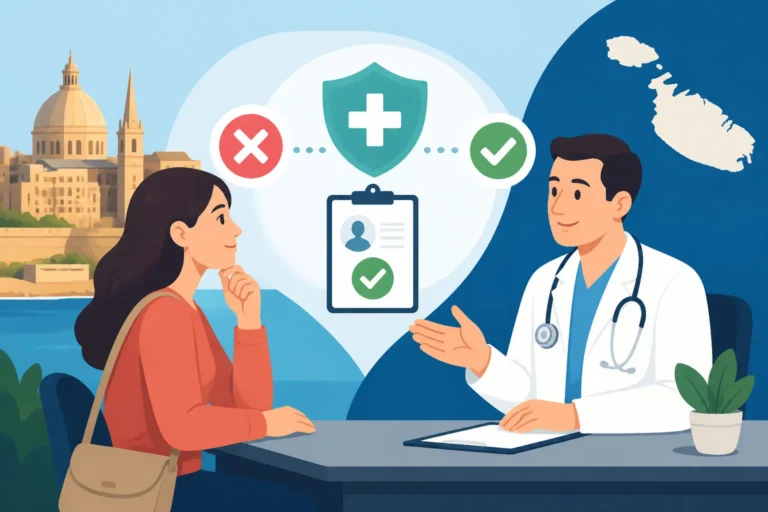
Many expats in Malta have private health insurance, either provided by their employer or purchased independently like SafetyWing for those in transition. It is important to check the "optical" rider on your policy. Most standard private policies in Malta do not cover routine eye exams or glasses unless you pay for a premium add-on.
However, private insurance is excellent for specialist consultations and surgeries. If you need a procedure and don't want to wait 18 months on the Mater Dei list, your private insurance will allow you to have the surgery at a private hospital like St. James or DaVinci within a week. Always get a "pre-authorization" from your insurer before committing to any expensive eye surgery.
Specialized Eye Services and Surgery
Malta is a hub for high-quality medical services, and ophthalmology is no exception. Beyond basic glasses, you can access advanced laser treatments, pediatric eye care, and complex surgical interventions. Because the island is small, the community of specialists is tight-knit, and word-of-mouth recommendations are the best way to find a surgeon you can trust.
If you are considering Finding a Doctor in Malta: GPs, Specialists, and the Referral System, you might find that many of the top eye surgeons also teach at the University of Malta. The level of expertise is equivalent to what you would find in London or Berlin. Many people even travel from Gozo or from abroad specifically for eye treatments here because the prices, while high for a local salary, are often lower than in the US or Northern Europe.
For those who are not yet fully integrated into the Maltese system, SafetyWing is a valuable asset. While it won't cover elective LASIK, it does cover complications from surgeries or sudden medical needs that might require specialist intervention. This is particularly important for expats who might be "between" residence permits and don't yet have full state entitlement.
Laser Eye Surgery (LASIK) in Malta
LASIK and other refractive surgeries are very popular in Malta. There are several specialized clinics, most notably the Saint James Eye Clinic in Birkirkara, which has a dedicated wing for laser vision correction. The process usually starts with a free or low-cost suitability screening. If you are a candidate, the procedure itself is quick, usually taking less than 30 minutes for both eyes.
The cost for LASIK in Malta typically ranges from €2,000 to €3,000 for both eyes. While this sounds like a lot, many people find that it pays for itself within five years by eliminating the need for expensive designer glasses and daily contact lenses. The recovery time is remarkably short, though you will need to stay out of the sea and swimming pools for a few weeks—a difficult task during a Maltese summer!
Cataract Surgery and Chronic Conditions
Cataracts are a common issue in Malta, partly due to the high UV exposure over a lifetime. In the public system, cataract surgery is free, but the waiting list has historically been quite long. In the private sector, you can have the surgery almost immediately. The cost is usually around €1,800 to €2,500 per eye, depending on the type of lens implant you choose (some lenses can also correct for distance and reading vision at the same time).
Managing a chronic condition like macular degeneration or diabetic retinopathy requires regular injections or laser treatments. These are provided at Mater Dei, and for those with entitlement, they are free. If you are managing such a condition, ensure you understand How the Specialist Referral System Works in Malta's Public Hospitals so you don't miss your follow-up windows.
Children’s Eye Care and Screening
Malta takes children’s vision very seriously. There are school screening programs that aim to catch "lazy eye" (amblyopia) and other issues early. If a problem is detected, children are referred to the specialized pediatric eye clinic. You can find more details in the guide on Are Eye Exams Covered for Children in Malta?.
Unlike adults, children under the age of 16 who are entitled to state care may receive a small subsidy toward the cost of their glasses. It isn't a huge amount, but it helps. Most private opticians also have a dedicated "kids' zone" with durable, flexible frames designed to survive the playground. If you have moved here with a family, getting their eyes checked before the start of the school year in September is a local tradition.
Practical Tips for Protecting Your Vision in the Mediterranean
Living in Malta means your eyes are under constant assault from the elements. It isn't just the sun; it's the wind, the salt spray, and the dust. If you wear contacts, you might find your eyes feeling much drier here than they did in a more humid or cooler climate. I always keep a bottle of "artificial tears" in my bag, especially when I'm spending the day in Valletta or riding the ferry.
Another tip is to be mindful of the "indoor-outdoor" transition. Many Maltese homes and offices have quite dim lighting compared to the blinding light outside. This constant adjustment can lead to headaches and eye strain. Investing in high-quality "transition" lenses that darken automatically can be a game-changer for daily life here.
Finally, don't ignore minor irritations. What looks like a bit of redness could be "surfer’s eye" (pterygium), a growth on the eye caused by UV, wind, and sand. It’s very common in Malta. Wear your sunglasses, even on cloudy days, as the UV levels here remain high throughout the year.
Dealing with Intense UV Rays and Glare
When buying sunglasses in Malta, look for the "Category 3" or "Category 4" rating. Category 3 is standard for bright Mediterranean sun, while Category 4 is for exceptionally bright conditions (though usually not recommended for driving). Polarized lenses are almost a necessity if you spend time near the water, as they cut the glare reflecting off the sea.
I’ve learned the hard way that cheap sunglasses from a beach kiosk are a bad idea. They might have dark lenses, which cause your pupils to dilate, but if they don't have proper UV filtering, you are actually letting more harmful rays into your eyes. Always buy from a reputable optician or a brand-name store where the UV protection is guaranteed.
Managing Dry Eyes in a Dusty Climate
The "Scirocco" wind, which blows in from the Sahara, often brings fine red dust to Malta. This can be a nightmare for contact lens wearers. On these days, it’s often better to switch to glasses to avoid trapping grit under your lenses. If you must wear contacts, daily disposables are a better choice as you can throw them away at the end of the day along with any accumulated dust and allergens.
Hydration also plays a big role in eye health. The heat in Malta can dehydrate you quickly, which in turn reduces tear production. Drinking plenty of water and using preservative-free eye drops will keep your eyes comfortable. If the dryness persists, visit an optometrist; they can check if your tear ducts are functioning correctly or if the local environment is simply getting the better of you.
Disclaimer
This article is for informational purposes only and does not constitute medical advice. While every effort has been made to ensure the accuracy of the information provided regarding the Maltese healthcare system as of 2026, rules and costs can change. Always consult with a qualified medical professional or a licensed optometrist in Malta for your specific eye care needs. For the most up-to-date information on state entitlement, please contact the Entitlement Unit or visit a local Health Centre.