How Pregnancy, Birth, and Maternity Leave Connect in Malta
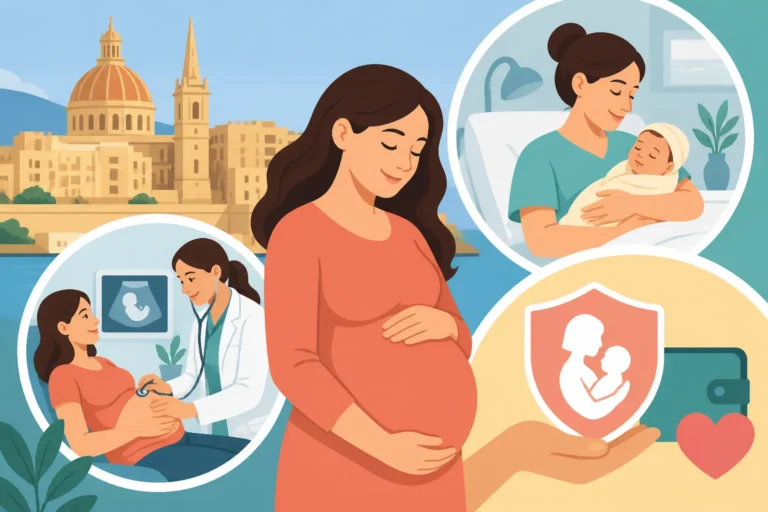
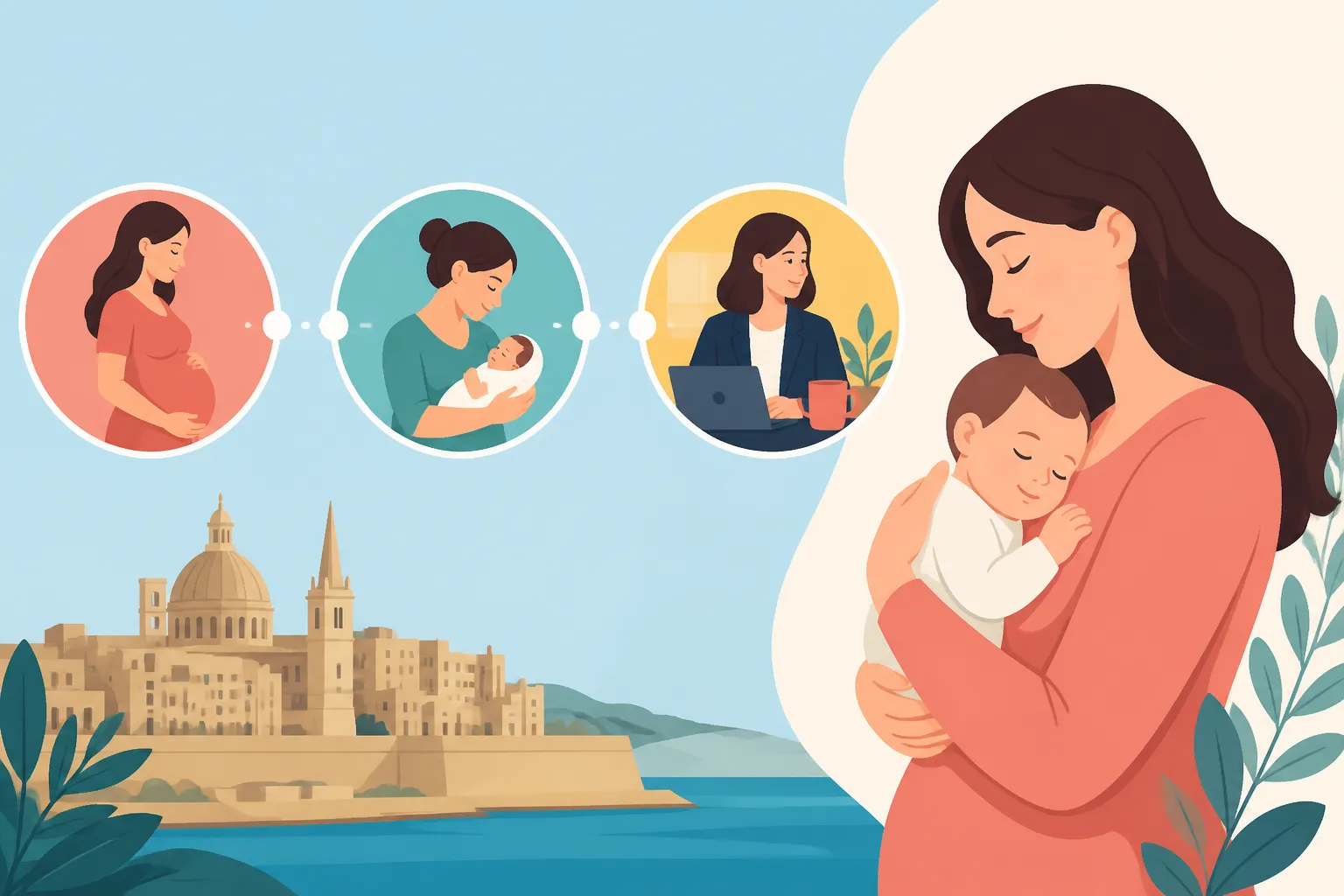
Navigating the maze of prenatal appointments, hospital bags, and employment laws in a foreign country can feel like trying to solve a puzzle where the pieces are written in a language you only half-understand. When I first saw those two pink lines in my tiny apartment in Sliema, my joy was immediately followed by a frantic search for how the Maltese system actually works. This guide bridges the gap between medical care, legal rights, and financial benefits to ensure your journey to parenthood in Malta is as smooth as possible.
Navigating the Maltese Healthcare System During Pregnancy
The moment you confirm your pregnancy, you are effectively entering a dual-track system of care. In Malta, the public healthcare system is robust, but the way you access it depends heavily on your residency status and social security contributions. If you are an EU citizen or a third-country national with a valid work permit, you are generally entitled to free care, but the "how" of it all often feels shrouded in mystery until you are actually in the thick of it.
Choosing Between Public and Private Antenatal Care
The first major decision you will face is whether to follow the public route, go private, or—as many expats do—opt for a hybrid approach. The public system, centered around Mater Dei Hospital, is highly regarded for its medical expertise and neonatal intensive care unit (NICU). Most routine Healthcare in Malta for Foreign Residents: The Complete System Guide (2027) will start with your local Health Centre. You’ll be assigned a community midwife and a schedule of scans and blood tests.
However, many expats find the public system a bit clinical and prone to long waiting times. This is why private care is so popular. In a private setting, you choose your specific consultant who will see you for every single visit. If you haven't yet secured your full residency rights or are still waiting for your ID card, having a plan with SafetyWing can provide peace of mind during those transitional weeks. While private consultants offer more personalized time, keep in mind that almost all private births in Malta still utilize the emergency resources of the public hospital if complications arise.
The Role of Health Centres and Community Midwives
If you choose the public route, you won't necessarily be going to the hospital for every check-up. Malta’s network of Health Centres is the backbone of prenatal care. You will likely spend a lot of time wondering Which Health Centre Do I Go to After Moving to Malta? as your primary point of contact. Once registered, you will meet with midwives who handle the bulk of your routine monitoring—measuring your bump, checking blood pressure, and listening to the heartbeat.
The community midwives in Malta are, quite frankly, the unsung heroes of the system. They are incredibly knowledgeable and often act as the primary bridge between you and the more formal hospital environment. They will guide you through the "ParentCraft" classes, which are free sessions offered by the state to prepare you for labor and newborn care. These classes are also a fantastic way to meet other expectant parents, providing a much-needed social circle in a country where you might not have family nearby.
Managing Pregnancy as a Foreign Resident
Bureaucracy is a national sport in Malta, and pregnancy adds several new layers to the game. To access free care, you must prove your entitlement. This usually means showing your eResidence card and evidence of social security contributions. If you are a digital nomad or a freelancer, the rules can be slightly different. For those on a Nomad Residence Permit and Residence Programmes in Malta, ensuring you have comprehensive coverage like SafetyWing is essential because you may not be paying into the local social security system that unlocks the public health "pink card" benefits.
It is also important to understand that your medical records might not automatically transfer if you move between the public and private sectors. I highly recommend keeping a "pregnancy folder" where you store every scan report, blood test result, and midwife note. In Malta, being your own administrative assistant is the best way to ensure nothing falls through the cracks when you transition from your local clinic to the delivery ward.
The Birth Experience in Malta: Mater Dei and Beyond
When the big day finally arrives, most of the action happens at Mater Dei, the primary state hospital located in Msida. Even if you have been seeing a private consultant in a posh clinic in Ta' Xbiex, there is a high probability you will end up at Mater Dei for the actual delivery, as it is the only facility equipped for high-risk scenarios and complex neonatal care.
What to Expect at Mater Dei Hospital
Mater Dei is a massive, modern facility, but it can feel overwhelming. The delivery suite is staffed by a rotating team of midwives and obstetricians. If you have been following the public system, you will be treated by whoever is on shift. The standard of care is excellent, but the environment is very much that of a busy state hospital. For those wondering What to Expect as a Patient at Mater Dei Hospital, the wards are generally clean and functional, though privacy can be limited in the postnatal recovery areas where rooms are often shared.
One cultural quirk to be aware of is the visiting hours. Malta is a very family-oriented society, and "quiet time" is a concept that is sometimes at odds with the local desire for the whole extended family to meet the new arrival immediately. However, the hospital has strict policies on how many visitors can be at your bedside. Your partner is generally allowed to stay with you during the birth and for several hours afterward, but overnight stays for partners in the public wards are usually not permitted unless you have secured a private room, which is subject to availability and an extra fee.
Private Hospitals and Specialized Birth Clinics
For those who prefer a more "hotel-like" experience, St. James Hospital is the primary private alternative for giving birth. Here, you get a private room, more flexible visiting hours, and the guarantee that your chosen consultant will be the one delivering the baby. It is a much calmer environment, which many expats find helps reduce the anxiety of giving birth abroad.
However, opting for a private birth comes with significant out-of-pocket costs unless you have a high-level insurance policy. You should check Private Healthcare and Insurance in Malta: When You Need Cover to see if your plan includes maternity benefits, as most policies have a 10-to-12-month waiting period before they cover pregnancy-related costs. If complications occur during a private birth, the baby and mother are often transferred via ambulance to Mater Dei anyway, so many parents choose to save the money for postnatal support and go straight to the public hospital for the delivery itself.
Registration and Administrative Steps Post-Birth
The paperwork doesn't stop once the baby is born; in fact, it accelerates. Within 15 days of the birth, you must register the child with the Public Registry. If the birth happens at Mater Dei, there is an office on-site where you can complete the initial forms. You will need both parents’ ID cards and, if you are married, your marriage certificate. If you were married outside of Malta, you might need a translated and apostilled version of that certificate, which is a common stumbling block for expats.
Once registered, the baby will be issued a Maltese ID number. This number is the key to everything—from booking Children's Health in Malta: Well-Baby Clinics, Vaccinations, and School Health appointments to applying for the children's allowance. If you are a non-Maltese citizen, remember that being born in Malta does not automatically grant the baby Maltese citizenship. You will also need to contact your home country’s embassy to report a birth abroad and apply for the baby's first passport.
Understanding Maternity Leave and Legal Rights in the Workplace
Malta has very specific laws regarding how much time you can take off and who pays for it. This is often where the most confusion lies, especially for those moving from countries with either very generous or very minimal leave policies. The Maltese system is a blend of employer-paid and state-subsidized time off.
Calculating Your 18 Weeks of Entitlement
In Malta, the legal maternity leave entitlement is 18 weeks. This is usually broken down into two distinct periods. The first 14 weeks are paid by your employer at your full normal salary. The remaining 4 weeks are optional, and while you are entitled to the time off, your employer is not legally required to pay you for them. Instead, the government provides a fixed maternity leave benefit for those final four weeks.
To qualify for this leave, you must inform your employer in writing at least four weeks before you intend to start your leave. You also need to provide a medical certificate from a doctor confirming your pregnancy and expected due date. It is a common mistake to assume the 18 weeks can be taken whenever; in reality, at least six weeks of the leave must be taken after the birth of the child to ensure the mother has adequate time to recover physically.
The Responsibility of the Employer vs. Social Security
The financial side of maternity leave is a bit of a tug-of-war. For the first 14 weeks, your employer pays you as if you were still working. However, they can then apply for a refund for a portion of this through the Maternity Leave Trust Fund, provided they have been paying the correct Social Security Contributions in Malta: Classes, Rates, and Benefits for you. As an employee, you don't really see this "back-end" transaction, but it is why your HR department might be very pedantic about your paperwork.
For the final 4 weeks (weeks 15 through 18), you must apply directly to the Social Security department for the "Maternity Leave Benefit." This is a flat rate and does not usually match your full salary, so many expats choose to return to work after 14 weeks or use their accumulated annual leave to bridge the financial gap. If you are self-employed, the system is different; you are generally entitled to a Sickness Benefit in Malta: Your Rights When You Can't Work or a specific self-employed maternity benefit, but you won't have an "employer" paying your full salary.
Protection Against Discrimination and Redundancy
Malta has strict laws protecting pregnant women in the workplace. It is illegal for an employer to terminate your contract because of your pregnancy or while you are on maternity leave. This protection even extends to your probationary period, although enforcing it can sometimes be a legal headache. If you feel you are being treated unfairly, it is worth checking Your Rights Under Malta's Employment and Industrial Relations Act to understand the specific protections available to you.
One detail that often surprises newcomers is that if you choose to resign from your job within six months of returning from maternity leave, your employer has the legal right to ask you to pay back the 14 weeks of maternity pay they gave you. This is intended to encourage mothers to return to the workforce, but it can feel like a trap if you decide that staying home is the better path for your family. Always read your contract carefully before making a post-birth career change.
Financial Support and the Maternity Benefit
Living in Malta is getting more expensive, and a new baby brings a whole new set of costs. Beyond your salary during leave, there are several state-funded benefits designed to help families. However, like everything else here, these are not automatic—you have to apply for them, and the timing is critical.
Qualifying for Social Security Benefits
To receive any financial help from the Maltese government, you generally need to have a record of social security contributions. This is known as "paying your NI" (National Insurance). For most expats on a Single Permit in Malta: Combined Work and Residence, Step by Step, these contributions are automatically deducted from your payslip. If you haven't been in Malta long enough or haven't paid enough contributions, you might find your benefit amounts are reduced or, in some cases, denied.
This is another area where having supplemental protection like SafetyWing can be useful, especially if you are in a "waiting period" for social security eligibility. The Entitlement Unit in Valletta is the office that decides whether you are eligible for free healthcare and the associated benefits. I spent a long morning there with a folder full of documents, and my advice is always to go early and bring every piece of paper you have ever received from the Maltese government.
How to Apply for the Maternity Benefit
The Maternity Benefit is separate from your employer-paid leave. It is a payment made to women who are pregnant or have recently given birth and who are not receiving a full salary from an employer during their leave. You can apply for this benefit through the Social Security online portal once you reach the eighth month of pregnancy.
You will need:
- A medical certificate signed by a doctor.
- Your IBAN (it must be a Maltese bank account for the smoothest processing).
- Your eResidence card number.
If you are a non-EU citizen, you might also need to provide copies of your work permit and evidence that you are living in Malta legally. The "maternity grant" is another one-time payment made to mothers who do not qualify for the full maternity benefit, ensuring that almost everyone receives at least some form of financial assistance upon the arrival of a child.
Additional Allowances for Families and New Parents
Once the baby is born and registered, you should immediately Apply for Children's Allowance in Malta. This is a means-tested payment that continues until the child is 16 (or 21 if they remain in full-time education). For most expats, this provides a small but helpful quarterly boost to the family budget. There is also a "Newborn Grant" which was recently introduced to help with the initial costs of car seats, strollers, and cribs.
| Benefit Type | Who Pays? | Duration | Eligibility |
|---|---|---|---|
| Maternity Leave Pay | Employer | First 14 Weeks | Full-time employees |
| Maternity Leave Benefit | Social Security | Weeks 15-18 | Employed/Self-employed |
| Maternity Grant | Social Security | One-time payment | Those not eligible for full benefit |
| Children's Allowance | Social Security | Until age 16/21 | Registered residents |
| Newborn Grant | Social Security | One-time payment | All registered births |
Postnatal Care and Settling In with Your New Baby
The weeks following birth are a blur of nappies and sleep deprivation, but in Malta, the healthcare system stays very much involved. You aren't just sent home and forgotten; the community health system kicks into gear to monitor both you and the baby.
Well-Baby Clinics and Vaccinations
One of the best features of the Maltese system is the Well-Baby Clinic. These are located within the Health Centres and are dedicated to monitoring the growth and development of your child. Your first appointment is usually scheduled within the first few weeks. Here, a pediatrician or a specialized nurse will weigh the baby, check their milestones, and start the National Immunisation Schedule for Children in Malta.
These vaccinations are free and follow a strict timeline. It is your responsibility to keep track of the "yellow book" (the vaccination record) provided by the clinic. You will need this book for everything in the future, including enrolling your child in childcare or school. The nurses at these clinics are generally very helpful and are a great resource for asking all those "is this normal?" questions that keep new parents up at night.
Breastfeeding Support and Mental Health
Malta has made great strides in promoting breastfeeding, and there is a dedicated breastfeeding clinic at Mater Dei. If you are struggling, you can call them or walk in for support from lactation consultants. It is a very welcoming environment and can be a lifesaver if you are feeling discouraged.
However, moving to a new country and having a baby is a massive life event that can take a toll on your mental health. Postnatal depression is a reality for many, and the isolation of being an expat can amplify it. If you are struggling, do not hesitate to ask for Mental Health Support in Malta: Services, Therapy, and Mount Carmel Hospital connections. The midwives at the Health Centres are trained to spot the signs of postnatal anxiety and can refer you to specialized perinatal mental health services which are discreet and supportive.
Balancing Career and Parenthood in Malta
Eventually, the 18 weeks will end, and you will face the decision of returning to work. Malta offers a "Free Childcare Scheme" for working parents, which is a massive financial relief. If both parents are employed (or one is employed and the other is studying), the government pays for the childcare fees directly. This makes Raising Children in Malta: Childcare, Schools, and Family Life much more affordable than in many other European countries.
You also have the right to request flexible working arrangements or reduced hours when you return, though these are subject to employer approval. There is also "Parental Leave," which is different from maternity leave. This is a period of four months of unpaid leave that each parent can take until the child is eight years old. While unpaid, it offers job security if you decide you need a longer break to settle into your new life as a family in the Mediterranean.
Disclaimer
The information provided in this guide is for educational and informational purposes only and does not constitute legal, financial, or medical advice. While every effort has been made to ensure the accuracy of the details regarding Maltese law and healthcare policies as of 2026, regulations can change frequently. Always consult with the relevant Maltese authorities, such as Identità, the Department of Social Security, or a qualified legal professional, to confirm your specific entitlements and obligations based on your individual residency status and employment contract.