Can I Bring My Regular Medication into Malta from Abroad?
Transitioning to a new life in Malta often involves a mountain of paperwork, but the panic that sets in when you realize your chronic medication might be seized at the airport is on another level. I remember sweating through my shirt at Luqa airport, clutching a bottle of prescription pills and wondering if I was about to be interrogated by customs. This guide solves every doubt you have about legally bringing your regular medication into Malta so you can focus on your move instead of the pharmacy counter.
Navigating the Maltese Customs and Medicine Authority Regulations
When you land in Malta, you are entering a jurisdiction governed by both European Union law and specific local regulations managed by the Malta Medicines Authority and the Customs Department. For most expats and tourists, the rule of thumb is that you are permitted to bring a "reasonable" amount of medication for your personal use. However, "reasonable" is not a vague term here; it is strictly defined as a three-month supply. If you try to bring a suitcase filled with a year’s worth of blood pressure medication, you are likely to run into significant trouble at the border, even if you have a valid prescription.
The Maltese authorities are particularly vigilant about the importation of pharmaceuticals because the island has a very structured healthcare system. They need to ensure that what you are bringing in is truly for you and not intended for local resale. This is why the first thing you should do after your move is understand Healthcare in Malta for Foreign Residents: The Complete System Guide (2027). Knowing how the local system operates will help you understand why the border agents are so meticulous. It is also worth noting that while travel insurance like SafetyWing is excellent for covering unexpected medical emergencies or lost baggage containing your essentials, it does not grant you a "pass" to ignore local import laws. You must still adhere to the three-month quantity limit regardless of your insurance status.
Essential Documentation for Your Prescription Medication
The biggest mistake I see newcomers make is assuming that the sticker on the side of the pill bottle is enough proof of a prescription. In Malta, customs officials have the right to demand formal documentation. You should always carry a physical copy of your original prescription, signed and stamped by your doctor. This prescription should clearly state your name (matching your passport), the generic name of the drug, the dosage, and the total quantity required for your stay.
In addition to the prescription, it is wise to carry a "Doctor’s Letter." This is a formal letter on the clinic's letterhead that summarizes your medical history and explains why the medication is necessary. This is especially vital if you are bringing needles, syringes, or liquid medications that exceed the standard 100ml limit for carry-on luggage. If you are ever stopped at the green or red channel at the airport, having this letter translated into English (if it isn't already) will save you hours of back-and-forth. If your medication gets lost or destroyed during travel, having these documents also makes it much easier to visit a local clinic and get a temporary replacement. You might find yourself asking, Can I See a Doctor in Malta Before My Health Entitlement Is Approved? The answer is yes, but you will need that documentation to prove your medical history to the Maltese GP.
Controlled Substances and the Schengen Certificate
If you take medication for ADHD (like Ritalin or Adderall), strong painkillers (like Tramadol), or certain benzodiazepines, you are entering the territory of "controlled substances." Malta follows the 1971 UN Convention on Psychotropic Substances, and their "Yellow List" is quite extensive. If you are traveling from within the Schengen Area, you must obtain a Schengen Certificate from your home country’s health department before you leave. This document legally authorizes you to carry narcotic or psychotropic drugs across borders for personal use.
For those coming from outside the Schengen Area—such as the US, Canada, or Australia—the process is more complex. You may need to contact the Malta Medicines Authority directly before you travel to request a special import permit for your personal supply. Do not skip this step. Some expats have reported having their ADHD medication confiscated because they didn't realize it was classified as a controlled substance in Malta. Even with a policy from SafetyWing helping you navigate travel hurdles, they cannot retrieve confiscated narcotics from customs. Once it is seized, it is usually gone, and you will have to start the long process of Finding a Doctor in Malta: GPs, Specialists, and the Referral System to get a local prescription.
Over the Counter Medications and Supplements
Many people worry about bringing basic stuff like Ibuprofen, Paracetamol, or their favorite brand of vitamins. Generally, you can bring these without any issues as long as they are in their original, unopened packaging. However, Malta has a very high standard for what can be sold over the counter. Some items that are OTC in your home country might require a prescription here. For example, high-dose Vitamin D or certain melatonin supplements can sometimes be restricted to pharmacy-only sales.
If you are a fan of herbal supplements or specific "wellness" brands, be aware that Maltese customs can be skeptical of powders or unlabeled capsules. Always keep them in the original bottle with the ingredients clearly listed. If you find yourself running low on basic supplies, you should learn about Buying Over-the-Counter Medicine at a Maltese Pharmacy. The pharmacists in Malta are incredibly knowledgeable and often act as a first point of contact for minor ailments, but they are very strict about not "bending the rules" for medications that require a script.
Comparison of Documentation for Different Medication Types
| Medication Type | Maximum Quantity | Required Documentation | Advice for Newcomers |
|---|---|---|---|
| Standard (e.g., Asthma, BP) | 3 Months | Original Prescription | Keep in original box. |
| Controlled (e.g., ADHD, Pain) | 30 Days | Schengen Cert / Narcotic Permit | Must declare at customs. |
| Refrigerated (e.g., Insulin) | 3 Months | Doctor's Letter for needles | Use a certified cool-bag. |
| OTC Supplements | Reasonable Use | None (if labeled) | Don't bring bulk powders. |
Practical Travel Tips for Your Medication
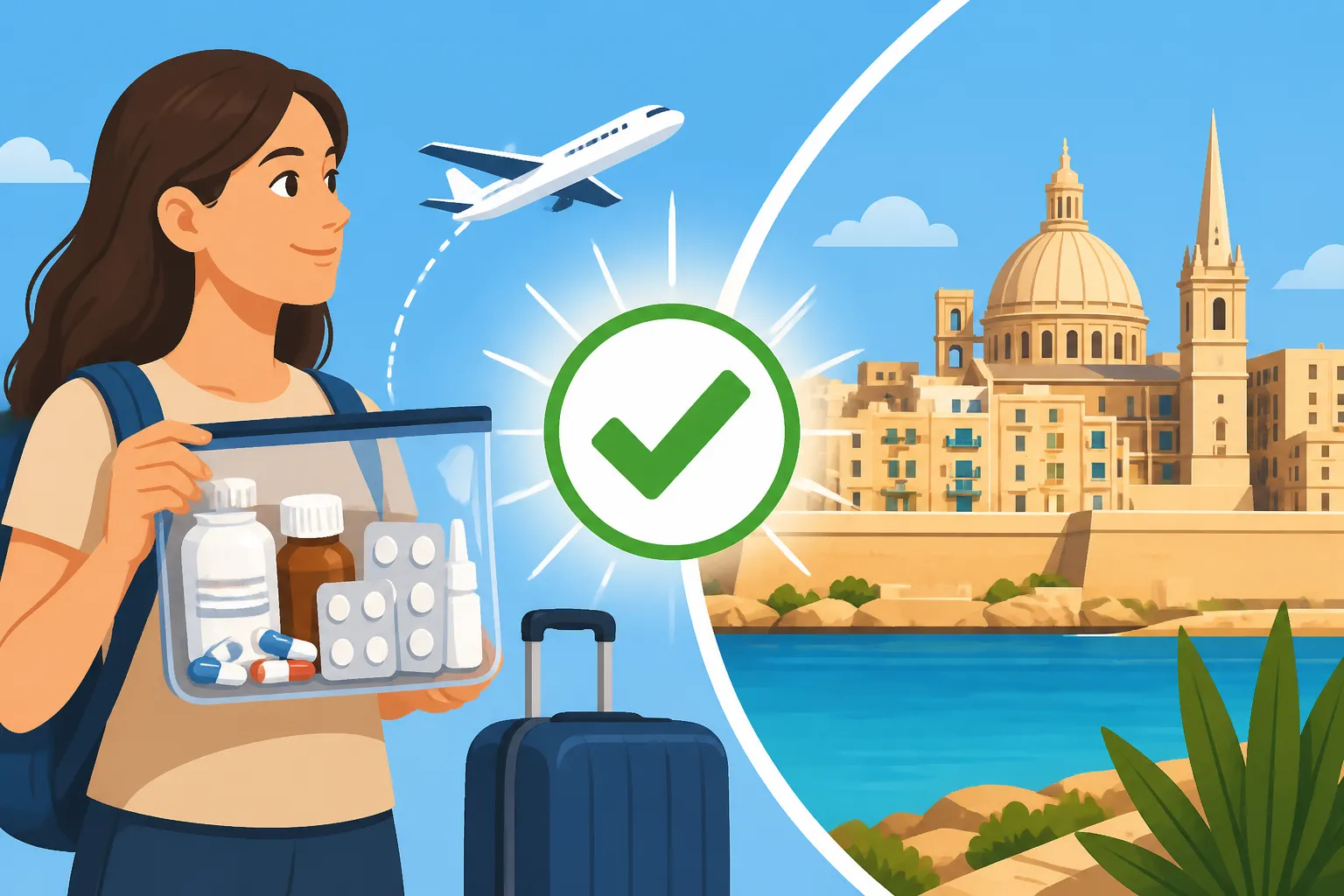
When you are actually in the air or on the ferry, where you store your medication matters as much as the paperwork. Never, ever put your life-saving medication in your checked luggage. Suitcases go missing, and cargo holds are not temperature-controlled. If your insulin or biological medication freezes or overheats, it becomes useless. Keep everything in your carry-on bag. If you are worried about the bag being stolen or lost in the cabin, having SafetyWing travel insurance can provide some peace of mind for the financial cost of replacing those items, but the immediate health risk is your priority.
For those with refrigerated meds, Malta’s summer heat is no joke. The "feels like" temperature can hit 45°C in August. If you land and have a long bus ride or a wait for your rental car, your medication could spoil. Invest in a high-quality medical grade cooling pouch. Once you arrive at your accommodation, check the fridge immediately. If you have any medical emergencies upon arrival due to lost or spoiled medication, you need to know What Number Do I Call for an Ambulance in Malta? so you aren't scrambling in a crisis.
Transitioning to the Maltese Pharmacy System
Once you have settled into your sunny new home and your initial three-month supply starts running low, you need a plan. You cannot simply have your home-country doctor mail you more pills. Importing medicine by post is technically illegal for individuals in Malta and will almost certainly be stopped by the Marsa postal customs hub. Instead, you need to enter the local system.
Your first step is to register with a local GP. They will review your foreign documents and issue a Maltese prescription. If you are working and paying social security, you may be entitled to free medication for chronic conditions. You should look into The POYC Pharmacy of Your Choice Scheme: How to Collect Free Medicines to see if your condition is covered. For conditions like diabetes or heart disease, you might be eligible for a "Pink Card" or "Yellow Card" under the Managing a Chronic Condition in Malta: Schedule V Medicines and Care scheme, which covers the cost of many essential drugs.
Dealing with Brand Discrepancies
A common frustration for expats is finding out that their specific brand of medication isn't registered in Malta. Since we are a small island market, pharmaceutical companies don't always register every brand here. Your Maltese doctor might prescribe a "generic" or a different brand name that contains the same active ingredient. This can be nerve-wracking if you’ve been on the same brand for a decade.
If your specific brand is absolutely necessary for medical reasons, your doctor can apply for a "Section 20" permit, which allows for the one-off importation of a non-registered medicine. This takes time and can be expensive, so start this process at least six weeks before your three-month travel supply runs out. During this transition, you might need a temporary sick note if you have a reaction to a new brand; in that case, it is helpful to know How Do I Get a Sick Certificate from a Doctor in Malta? to ensure your employment rights are protected.
Pharmacies and Sunday Services
One of the quirks of living here is the pharmacy roster. Unlike some countries where a massive 24-hour pharmacy is on every corner, Malta uses a rotating Sunday and public holiday schedule. Only a few pharmacies stay open on these days, and they usually close by 12:30 PM or 7:00 PM depending on the location. It is a good idea to bookmark the "Pharmacy Roster" on the Department of Health website immediately. If you run out of meds on a Saturday night, you will need to know Do Maltese Pharmacies Open on Sundays and Public Holidays? to find where to go. Always plan ahead and never wait until the last pill to seek a refill.
Summary Checklist for Bringing Medication to Malta
To ensure your move is as smooth as my second attempt at Luqa customs (which was much more successful), follow this checklist:
- Contact the Malta Medicines Authority if you take any controlled substances.
- Get a signed, stamped letter from your doctor in English.
- Ensure you have a three-month supply and no more.
- Keep all meds in their original boxes with your name on the pharmacy label.
- Pack your medication in your carry-on bag, not checked luggage.
- Check if your travel insurance, such as SafetyWing, covers emergency medical consultations.
- Book an appointment with a Maltese GP within your first month to start the local prescription process.
- Research Pharmacies and the POYC Scheme: Getting Medicines in Malta to understand local collection points.
Living in Malta is a dream, but the bureaucracy is the price of admission. By being proactive about your health and your medications, you can avoid the stress of customs delays and ensure that your only concern is whether to have another pastizz for breakfast.
Disclaimer
The information provided in this guide is for informational purposes only and does not constitute legal or medical advice. Regulations regarding the importation of medication can change frequently. Always consult with the Malta Medicines Authority, the Maltese Customs Department, or a qualified legal professional before traveling with medication. Ensure you verify the current status of your specific medications with official government sources to avoid legal complications or health risks.