Are Cancer Screenings Free in Malta?
Navigating a new healthcare system is often one of the most stressful parts of moving to the Mediterranean. I remember sitting in a sun-drenched cafe in St. Julian's, clutching a government letter in Maltese and wondering if I was being invited for a check-up or billed for a tax I didn't know existed. This guide solves the mystery of cancer screenings in Malta, explaining exactly what is free, who is eligible, and how you can ensure you don't fall through the cracks of the national system.
The National Screening Programme and Health Entitlement
The short answer is yes, cancer screenings are free in Malta, but there is a significant "but" involved: you must be part of the public healthcare system. For most of us expats, this means you need to be regularly paying your Social Security contributions or be covered under a specific bilateral agreement. In Malta, healthcare isn't just "free for everyone who steps off a plane"; it is a contributory system where your right to care is tied to your employment status or your residency permit.
When I first arrived, I assumed my eResidence card was a "golden ticket" to every clinic. The reality is more nuanced. To access free screenings, the National Screening Centre needs to have you in their database, which usually happens once your social security records and your residential address are aligned. If you are a third-country national working on a single permit, your entitlement is generally solid as long as you are employed. However, if you are here on a different status, you might find that Health Entitlement in Malta: How Social Security Contributions Unlock Free Care is the most important topic you can study to understand your specific rights.
It is also worth noting that the "free" aspect applies to the specific national invitation-based programmes. If you decide you want a screening outside of the designated age brackets or without an invitation, you might be redirected to the private sector. This is where many newcomers choose to supplement their public coverage. Having a flexible insurance option like SafetyWing can be a lifesaver during those first few months when your public entitlement is still being processed or if you prefer the speed of private clinics.
The Importance of the Entitlement Unit
Before you can even think about a free mammogram or a colonoscopy, you need to ensure the Entitlement Unit at St Luke’s Hospital has cleared you. They are the gatekeepers. Even if you are paying tax, the screening database pulls from specific health registries. If you’ve recently moved, I highly recommend checking out How to Register for Health Entitlement with the Entitlement Unit in Malta to make sure your name is actually on the list.
Some expats have lived in Sliema for three years and never received a screening invitation simply because they hadn't updated their address with Identità or the health department. The system is proactive, but it isn't psychic. If the government doesn't know where you live, that invitation for a free cervical smear or a FIT kit will end up in a dead-letter office or at your old landlord's house.
The Role of Social Security
Your NI (National Insurance) number is the backbone of your health rights here. Every time you see that deduction on your payslip, remind yourself that it is paying for these preventive services. If you are self-employed, the rules change slightly regarding how much you pay and when your entitlement kicks in. To get a better handle on this, you should read up on How Maltese Health Entitlement Fits with Social Security Contributions to ensure you are fully covered before you seek out specialist services.
For those who are not yet paying into the system—perhaps you are still job hunting or are here as a digital nomad—you won't be eligible for the free national screening invitations. In these cases, maintaining a policy like SafetyWing is essential. SafetyWing provides that bridge, ensuring that if you need to seek private diagnostic care because you aren't yet "in the system," you aren't paying entirely out of pocket for expensive consultations.
The Three Pillars of Free Cancer Screening in Malta
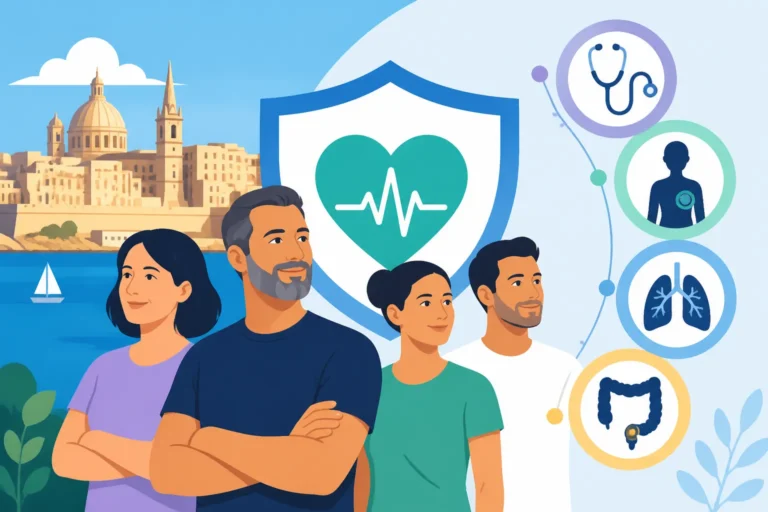
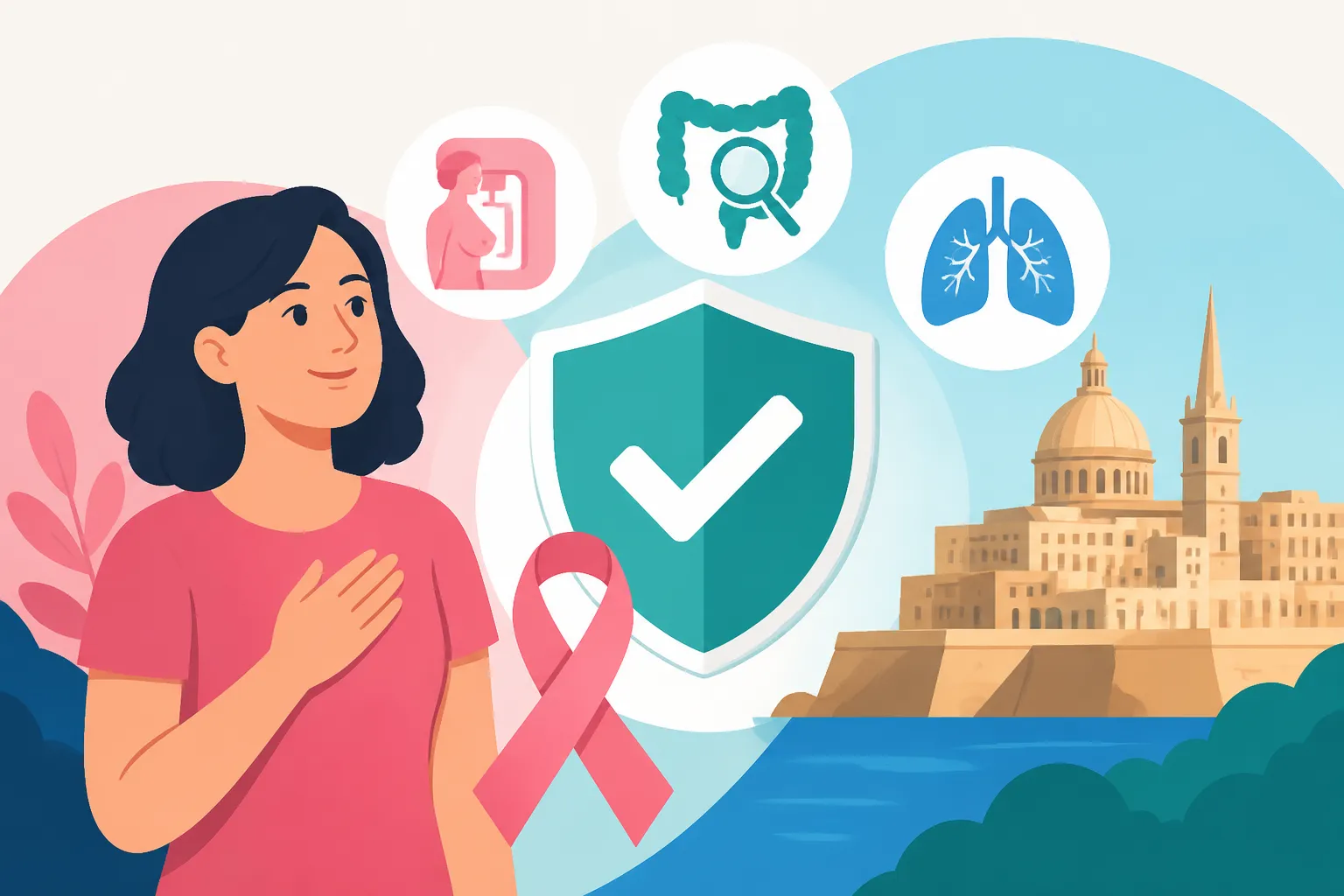
Malta currently focuses its free preventive efforts on three specific types of cancer: breast, cervical, and colorectal. These are managed by the National Screening Centre, located at Lascaris Wharf in Valletta. It’s a beautiful spot right by the water, but don't let the scenic view distract you from the importance of the appointment. These programmes are "invitation-only," meaning the government will send you a letter when it is your turn based on your age and gender.
Breast Screening Mammograms
The breast screening programme in Malta is incredibly robust and targets women between the ages of 50 and 69. If you fall into this age bracket and are registered with the health department, you should receive an invitation every three years. The screening itself takes place at the National Screening Centre in Valletta. It is a dedicated facility, which I personally prefer over the hustle and bustle of Mater Dei, as it feels much more focused and less like a "hospital" environment.
If you are younger than 50 but have a family history of breast cancer, you won't necessarily wait for the "free" invitation letter. Instead, you would need to visit your GP at a local health centre to get a referral for a symptomatic check-up. This is a different pathway and is explained in detail in How the Specialist Referral System Works in Malta's Public Hospitals. However, if you just want a routine "peace of mind" mammogram and you are 35, the public system likely won't cover it for free unless there is a clinical reason.
Many women in the expat community choose to go private for annual check-ups to avoid the three-year gap in the public system. Using an insurance provider like SafetyWing can help manage the costs of private specialist visits if complications are found. SafetyWing is often favored by the international community here for its ease of use when navigating both local and international health needs.
Cervical Screening Smear Tests
Cervical screening (the smear test) is offered to women starting from age 25. Currently, the invitations are sent out every three years for those aged 25 to 40, and every five years for those aged 41 to 65. Unlike the mammograms, which are centralized in Valletta, cervical screenings are often carried out at various health centres across the island, such as those in Mosta, Floriana, or Paola.
When you receive your invitation, it will usually specify a date and time at a particular health centre. If that doesn't work for you, you can call the screening office to reschedule. One thing I learned the hard way: always bring your Maltese ID card. They are very strict about this. If you are still waiting for your physical card, you might want to look at Getting Your Maltese ID Card Number: The Key to Accessing Healthcare to understand how to use your interim documentation.
Colorectal Cancer Screening
Colorectal screening is perhaps the most "convenient" of the three because it starts with a kit sent directly to your home. This programme targets men and women between the ages of 60 and 74. You will receive a Faecal Immunochemical Test (FIT) kit in the mail with clear instructions on how to collect a sample. You then drop it off at a designated health centre or a POYC (Pharmacy of Your Choice) location.
This programme is vital because it catches issues long before symptoms appear. If the test comes back positive for traces of blood, you will be fast-tracked for a colonoscopy at Mater Dei Hospital. For more on how the pharmacy side of things works, you can check out The POYC Pharmacy of Your Choice Scheme: How to Collect Free Medicines. The efficiency of this "mail-in" system is one of the highlights of the Maltese public health service, but it only works if your address is current in the government system.
| Screening Type | Age Group | Frequency | Location | Cost (Public System) |
|---|---|---|---|---|
| Breast (Mammogram) | 50 – 69 | Every 3 years | National Screening Centre, Valletta | Free |
| Cervical (Smear Test) | 25 – 65 | Every 3 or 5 years | Local Health Centres | Free |
| Colorectal (FIT Kit) | 60 – 74 | Every 2 years | At Home / Health Centres | Free |
| Symptomatic Testing | All Ages | As needed | Mater Dei Hospital (Referral) | Free (with entitlement) |
Private Options and the Waiting List Reality
While the free screenings are a fantastic resource, we have to talk about the "elephant in the room": waiting times. Because these are national programmes, the sheer volume of patients can mean that if you miss an appointment, your next "free" slot might be months away. Furthermore, if a screening flags an issue, the wait for a follow-up biopsy or specialist consultation at Mater Dei can be a source of significant anxiety.
This is why many of us expats maintain a "hybrid" approach to healthcare. We use the public system for routine things but keep private insurance for "just in case" scenarios. Private hospitals like St. James or DaVinci offer these screenings almost instantly for a fee. If you have SafetyWing, you have a layer of protection that allows you to seek private care when the public waiting list feels too long. SafetyWing is particularly useful for those who want to choose their own specialists without waiting for the public referral system to churn through its backlog.
Why Go Private?
The primary reason people opt out of the free public screenings is the desire for more frequent testing. For example, the Maltese public system offers mammograms every three years, but many international guidelines suggest every two years or even annually for certain risk groups. If you want that extra frequency, you will have to pay for it privately. You can learn more about this in Private Healthcare and Insurance in Malta: When You Need Cover.
Another factor is the environment. While the National Screening Centre is great, some people prefer the private clinic experience where appointments are often more flexible and the results are delivered via email within days. If you are balancing a busy job in iGaming or Fintech, taking a whole morning off to travel to Valletta and find parking (which is a nightmare!) might be less appealing than a 20-minute private appointment in Sliema.
Fast-Tracking Your Results
In the private sector, "fast-tracking" isn't a special favor; it's the standard. If you are worried about a specific symptom, waiting for a government invitation is not the right move. You should immediately see a GP, and if you have coverage like SafetyWing, you can often bypass the primary health centre queues and go straight to a private specialist. For a better understanding of how the public and private worlds collide, read Can I Use Private and Public Healthcare at the Same Time in Malta?.
How to Ensure You Receive Your Invitation
The most common reason expats miss out on free screenings is a breakdown in communication. In Malta, your health records are linked to your "eResidence" profile. If you move from a flat in St. Paul's Bay to a house in Naxxar and don't officially update your address with Identità, your screening invitation will go to your old address. The Post Office does not always reliably forward government mail.
Update Your Address Immediately
As soon as you sign a new lease, you must register it. This isn't just for your permit; it’s for your life. The screening database is updated periodically from the central residence database. If you want to make sure you are in the loop, check out Registering Your Lease with the Housing Authority in Malta to ensure your paperwork is in order.
Beyond just the address, you should also ensure you are registered at your local health centre. Each town has a "catchment" area. If you live in Gzira, you belong to the Gzira Health Centre. Walking in and introducing yourself (and ensuring your ID is in their system) is a great way to verify that you are "visible" to the health department. You can find your local branch by looking at Which Health Centre Do I Go to After Moving to Malta?.
Using the myHealth Portal
Malta has a surprisingly good digital health portal called myHealth. If you have a Maltese eID, you can log in and see your records, including some test results and upcoming appointments. It allows you to link yourself to a private GP who can then see your public records, which is incredibly helpful for continuity of care. Newcomers are generally advised to set this up in their first month. For a step-by-step on how to do this, see How Do I Register on the myHealth Portal in Malta?.
Once you are on myHealth, you can sometimes track if an invitation has been issued. It gives you a sense of agency in a system that can otherwise feel a bit opaque. If you see that you are due for a screening but haven't received the letter, you can proactively call the National Screening Centre at +356 2122 7470 or 2122 7471.
What Happens if Something is Found?
This is the part no one likes to think about, but it's why we screen in the first place. If a free screening in Malta indicates a problem, the public system moves quite quickly. You will generally be referred to Mater Dei Hospital, which is the primary acute care facility on the island. You can read more about what to expect there in our guide on What to Expect as a Patient at Mater Dei Hospital.
The public oncology services in Malta, centered at the Sir Anthony Mamo Oncology Centre (SAMOC), are world-class. The treatment itself, including chemotherapy and radiotherapy, is free for those with health entitlement. However, the "extras"—like specific brand-name medications that might not be on the government's "Formulary" list—can be expensive.
This is another area where having international insurance like SafetyWing provides a safety net. While the core treatment is free, there are always associated costs—loss of income, private second opinions, or specialized treatments abroad—that can strain your finances. SafetyWing is designed for the modern expat who needs that global flexibility, especially when dealing with a serious diagnosis that might make you want to seek treatment or advice in your home country.
Seeking a Second Opinion
Even within the public system, you have the right to discuss your results with your GP and ask for a second opinion. However, a second opinion within the public system can take time. Most people who want a second opinion go to a private specialist. This is a very common practice in Malta, and most public consultants also have private practices in the afternoons. Understanding the costs involved is key, so take a look at What Does Public Healthcare Actually Cost in Malta? to budget accordingly.
Support Services and NGOs
Malta has an incredible network of NGOs that support cancer patients, such as the Malta Community Chest Fund and the Hospice Malta. These organizations often step in where the government system ends, providing emotional support, palliative care, and even financial assistance for specialized medicines. As an expat, you are eligible for many of these services, though some require a residency period.
Navigating these can be overwhelming, so having a good relationship with a local GP is essential. They are your "navigator" through the Maltese system. If you haven't found one yet, Finding a Doctor in Malta: GPs, Specialists, and the Referral System is a great place to start your search.
Preventive Health Beyond Screenings
While the free cancer screenings are the "big" items, the Maltese health system offers other preventive measures that are often overlooked by the expat community. For instance, there are regular vaccination drives and health awareness campaigns focused on diabetes and heart disease, which are prevalent on the islands.
If you are a resident, you can also access certain preventive programmes at your local health centre without an invitation. These include blood pressure checks and glucose monitoring. Taking advantage of these can help identify risk factors before they become serious issues. I highly recommend reading Preventive Health and Screening Programmes for Adults in Malta for a full list of what you can access once you are settled.
The Importance of Sun Safety
Living in Malta means 300 days of sunshine, which is great for the soul but tough on the skin. Skin cancer screenings are not currently part of a "national invitation" programme in the same way breast or cervical screenings are. However, you can book a skin check at the Dermatology Department at Sir Paul Boffa Hospital or through a private clinic. Given the high UV index here, this is one "screening" you should probably pay for privately once a year. For more on handling the local environment, see How Do I Cope with the Summer Heat and My Health in Malta?.
Mental Health and Holistic Wellness
Prevention isn't just about physical screenings. The stress of moving to a new country and navigating bureaucracy can take a toll. Malta offers mental health support through the public system, though like many other specialties, the waiting lists can be long. If you find yourself struggling, don't wait for a crisis. Check out Mental Health Support in Malta: Services, Therapy, and Mount Carmel Hospital to see what is available. Many expats find that their private insurance, including providers like SafetyWing, offers much better access to English-speaking therapists and counselors.
Final Thoughts for the New Resident
Malta’s commitment to free cancer screening is one of the best perks of living here, provided you do the legwork to stay "visible" in the system. Don't wait for the letter to find you—make sure your address is updated, your social security is being paid, and your eID is active.
If you're in that "in-between" phase where you're not yet fully covered by the Maltese state, or if you simply want the peace of mind that comes with faster, private access, a policy with SafetyWing is a smart investment. It bridges the gap between your arrival and your full integration into the Maltese public health system, ensuring that your health is never a casualty of bureaucracy.
Stay proactive, stay informed, and don't be afraid to ask questions at your local health centre. The Maltese are generally very helpful, but you have to be the one to start the conversation.
Healthcare Entitlement Disclaimer
This guide is intended for informational purposes only and does not constitute legal or medical advice. Healthcare regulations in Malta, including eligibility for free screenings and social security requirements, are subject to change by the Ministry for Health and the Department of Social Security. Always verify your personal entitlement status with the Entitlement Unit or your employer. While we strive to keep this information up to date, individual circumstances may vary based on your specific residency permit and social security contributions. If you are experiencing symptoms, do not wait for a screening invitation; consult a medical professional immediately.