Are Eye Exams Covered for Children in Malta?
Noticing your child squinting at the whiteboard or holding a book too close to their face is a universal moment of parental anxiety that feels ten times more stressful when you are navigating a foreign healthcare system. I remember the frantic afternoon I spent trying to figure out if I should just walk into an optician in Sliema or wait weeks for a state appointment. This guide breaks down exactly how eye exams for children are covered in Malta, what costs you will encounter, and how to navigate the public versus private routes effectively.
The Foundation of Pediatric Eye Care in the Maltese Public System
When you move to Malta, understanding the public health landscape is your first priority. Pediatric eye care is largely integrated into the national health scheme, meaning that for residents who are paying social security contributions, basic screenings and specialist consultations at public hospitals are provided without a direct fee. However, the definition of "covered" can be a bit nuanced when you transition from the exam room to the spectacles shop.
The public system is designed to catch vision issues early through the School Health Service. If your child is enrolled in a state, church, or independent school, they will likely undergo routine vision screenings at specific developmental milestones. I remember receiving that first slip of paper from my daughter's school; it’s a simple screening to check for basic refractive errors or signs of strabismus (lazy eye). If the school nurse identifies a potential issue, they will issue a referral, which is your golden ticket into the deeper layers of the state medical system.
For those who are still waiting for their official residency documents to be processed, the situation is slightly different. If you haven't yet secured your full entitlement, you might find yourself in a gray zone. In these instances, having a bridge like SafetyWing can be a lifesaver for unexpected medical consultations while you wait for the local bureaucracy to catch up. It provides that essential peace of mind while you are still figuring out Health Entitlement in Malta: How Social Security Contributions Unlock Free Care. Without this, a simple check-up for an eye infection or a sudden vision change could result in unexpected out-of-pocket expenses at a private clinic.
The Role of Health Centres and the Referral Pipeline
If your child hasn't been screened at school but you suspect they need an eye exam, your first point of contact shouldn't be the big hospital, Mater Dei. Instead, you should start at your local Health Centre (known locally as the 'bereġ'). This is the heartbeat of Maltese community care. You will need to see a General Practitioner (GP) who will then assess the child and, if necessary, write a referral to the pediatric ophthalmology department.
Navigating this requires you to be registered correctly with the local authorities. You cannot simply walk in and demand a specialist without the groundwork being done. This involves Registering with a Health Centre and Choosing a GP in Malta to ensure your child’s records are in the system. When I first did this, I was surprised by how efficient the GP was, but also by the reality of the waiting list that followed. The GP’s referral puts you on the national list, and you will eventually receive an appointment letter by post.
The referral process is a strict gatekeeping mechanism. It ensures that the highly specialized consultants at the hospital are seeing children who truly need specialist intervention rather than just a routine prescription update. Understanding How the Specialist Referral System Works in Malta's Public Hospitals is vital because if you bypass this and go straight to the hospital, you will likely be turned away or redirected back to your local clinic. It’s a lesson in patience that every expat in Malta eventually learns.
What is Truly Free and What Carries a Cost
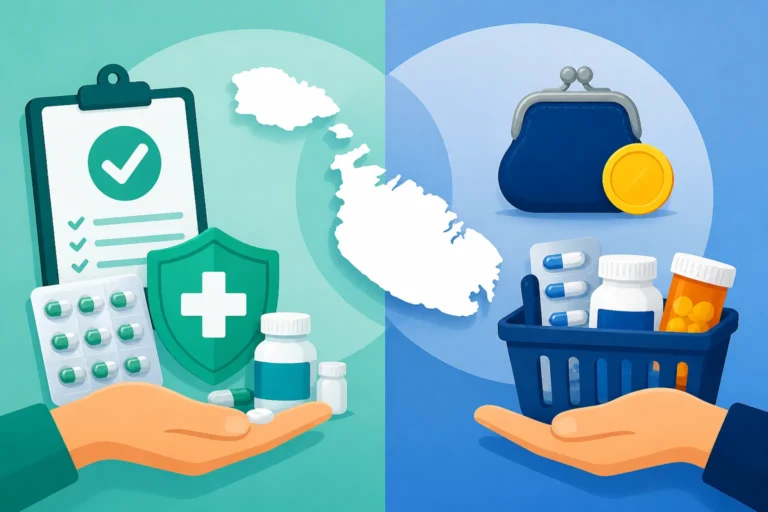
While the consultation with an ophthalmologist at Mater Dei is free for entitled residents, the actual hardware—the glasses, the lenses, and the specialized coatings—is a different story. This is often where parents get confused. In the Maltese public system, eye exams for children are covered, but spectacles are generally considered a private expense unless the family qualifies under specific social assistance schemes, such as the "Pink Card" system.
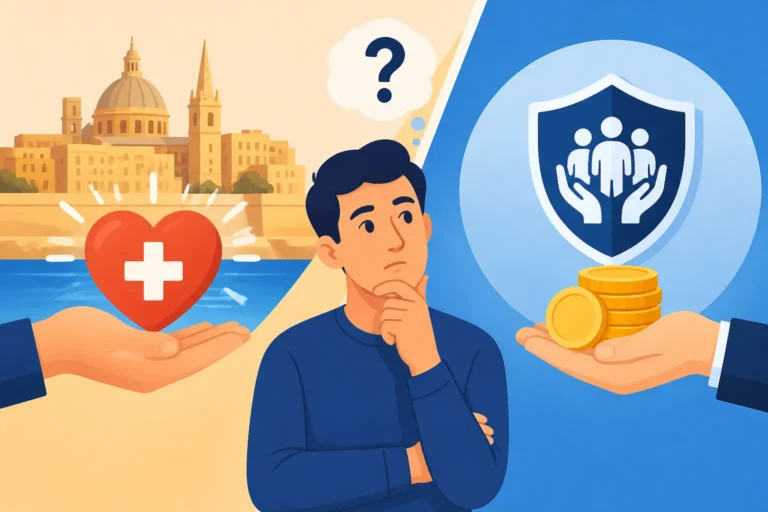
The "Pink Card," or Schedule V, is reserved for those on low incomes or with specific chronic conditions. For the vast majority of working expats, you will be expected to take the prescription given by the hospital and fulfill it at a private optician. This is a common theme in the local system, which is why it’s important to understand What Public Healthcare Costs in Malta: Free Services and Paid Extras. You get the world-class expertise for free, but you pay for the "retail" side of the treatment.
In my experience, the cost of children's frames in Malta can range anywhere from €50 to €200, depending on the brand and the durability. Lenses can add another €40 to €100. If your child is very young and prone to breaking their glasses, these costs can add up quickly. During those initial months in Malta, if you are still waiting for your ID card and haven't yet started your social security contributions, SafetyWing can help cover the costs of emergency eye treatments that fall outside routine exams, ensuring you aren't hit with a massive bill before you've even received your first Maltese payslip.
Comparing Public and Private Eye Care Options
Many expats eventually choose to go private for their children's eye exams simply to save time. The public waiting list for a non-urgent pediatric ophthalmology appointment can stretch for several months. If you notice your child is struggling with schoolwork now, waiting six months for an appointment at Mater Dei feels impossible. Private clinics, such as St. James Hospital or specialized opticians like O’Hea or Tuaco, often have appointments available within a week.
| Feature | Public System (Mater Dei/Health Centres) | Private Clinics/Opticians |
|---|---|---|
| Cost of Exam | Free (for entitled residents) | €30 – €80 |
| Waiting Time | 3 to 9 months (non-urgent) | 1 to 7 days |
| Hardware Costs | Private expense (usually) | Private expense |
| Referral Needed? | Yes, from a Health Centre GP | No, can book directly |
| Expertise | Highly specialized ophthalmologists | Optometrists and visiting specialists |
The quality of care in the public sector is exceptional. The consultants at Mater Dei are often the same ones you would see privately, but the environment is much busier. If you choose the public route, you need to know What to Expect as a Patient at Mater Dei Hospital because the pediatric wing, while friendly, is a high-volume area. On the other hand, a private optometrist at a local shop can handle a standard eye test for a prescription, but they may still refer you to a specialist if they detect underlying health issues like glaucoma or cataracts.
For those living on the sister island, the logistics are slightly different. You will likely start at the Gozo General Hospital. If the case is complex, your child might be transferred to Malta for specialist care. Dealing with Healthcare in Gozo: Gozo General Hospital and Inter-Island Transfers is part of life for Gozitan residents, and it requires an extra layer of planning for appointments.
Pediatric Ophthalmology vs. Standard Optometry
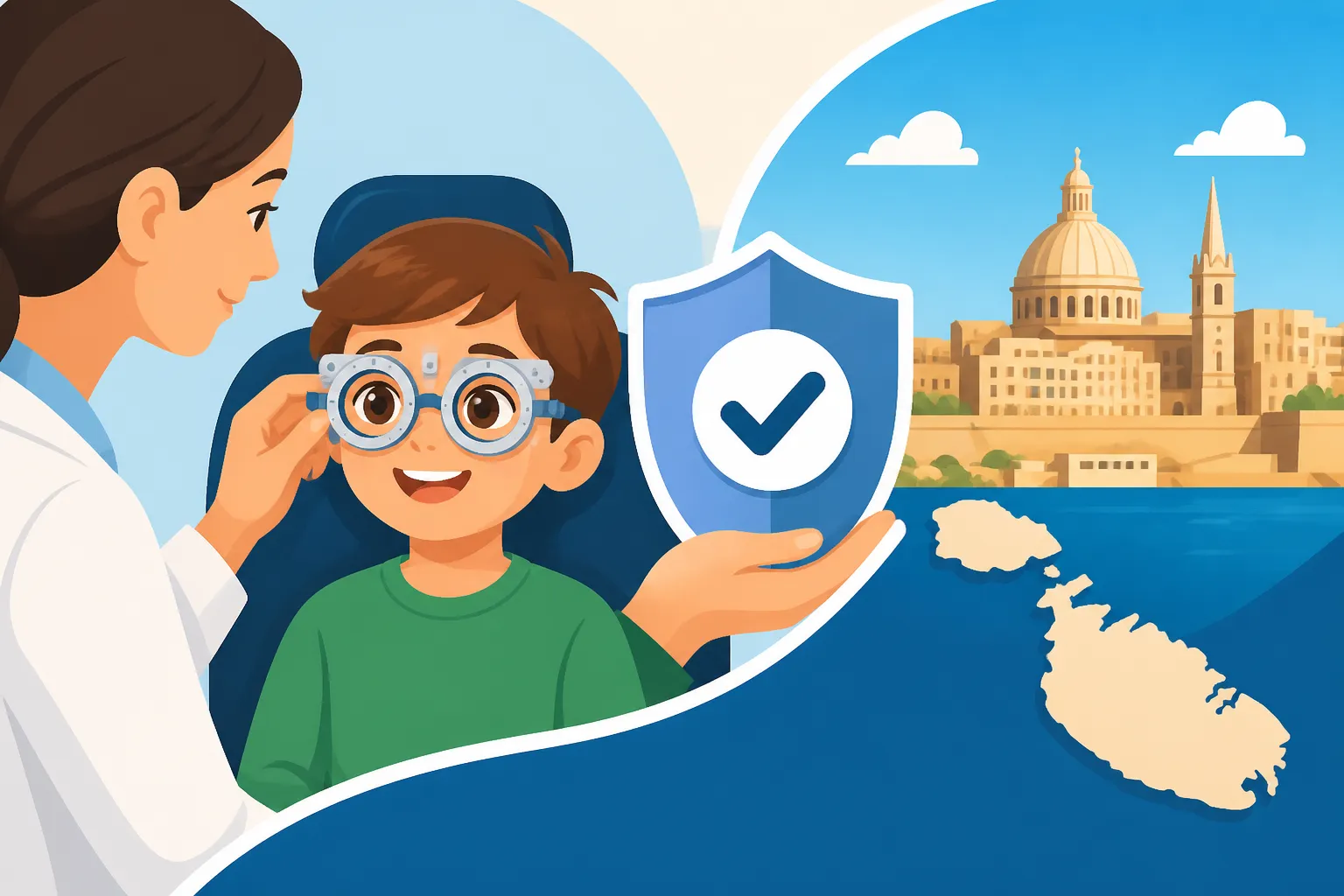
It is important to distinguish between a standard eye test at a glasses shop and a pediatric ophthalmology exam. Most opticians in Malta have an optometrist on-site who can check if your child needs glasses. This is usually free or very cheap (around €20) if you buy the glasses from them. However, for young children (under 8), many experts recommend seeing a pediatric ophthalmologist who can use dilating drops to get a more accurate reading of the eye's shape and health.
If your child has a "lazy eye" or a squint, a regular optician might not be enough. You will want the specialized diagnostic equipment found in the hospital or a high-end private clinic. This is where Children's Health in Malta: Well-Baby Clinics, Vaccinations, and School Health services come in handy, as they often provide the initial detection that leads to these specialist visits.
If you're in the middle of a move and haven't yet secured your Getting Your Maltese ID Card Number: The Key to Accessing Healthcare, you might find that private clinics are your only immediate option. Using SafetyWing during this transition allows you to access these private specialists without the fear of a significant financial setback. It’s the perfect safety net while you wait for the Maltese state system to "recognize" your right to free public care.
Practical Steps for Parents in Malta
If you suspect your child needs an eye exam today, here is the roadmap I wish I had when I first arrived. First, check your residency status. If you are a social security contributor, head to your local Health Centre. Bring your ID card and your child’s birth certificate (and a translation if it isn't in English or Maltese). Ask to see a GP for a pediatric eye referral.
Once the referral is in, you wait. If the wait is too long, call around to private clinics. Many parents in Malta use a hybrid approach: they use Eye Care and Opticians in Malta: Exams, Glasses, and Costs private services for the initial prescription to get the child through the school year, but stay on the public list for long-term monitoring by specialists at Mater Dei.
Finally, don't forget the importance of sun protection. Malta’s UV index is notoriously high, and eye health starts with prevention. Investing in high-quality, UV-rated sunglasses for your children is just as important as the exam itself. Most local opticians stock a wide range of "indestructible" frames for kids, which are worth every penny in the long run.
Navigating the Bureaucracy of Health Entitlement
One of the biggest hurdles for newcomers is proving they are entitled to the free eye exams provided by the state. It isn’t enough to just live here; you must be part of the system. This usually means having a job where you pay National Insurance or being the dependent of someone who does. If you are an EU citizen, your EHIC can cover some urgent needs, but it isn't a long-term solution for routine pediatric eye care.
The process of proving entitlement can be tedious. You may need to visit the Entitlement Unit in Valletta or at St. Luke's Hospital to get your "Certificate of Entitlement." This document is what tells the hospital and the Health Centres that you are eligible for the same care as a local. Until that document is in your hand, you are technically a private patient. This is precisely why we recommend having comprehensive travel or expat insurance like SafetyWing for those first 90 days. It bridges the gap between your arrival and the moment the Maltese state finally issues your paperwork.
For a deeper dive into how this all connects, check out Healthcare in Malta for Foreign Residents: The Complete System Guide (2027). It explains the interplay between your residency permit, your social security number, and your access to specialists. Understanding this early will save you hours of frustration in waiting rooms and prevent you from being hit with "foreigner rates" at the hospital pharmacy or clinic.
Summary Table of Pediatric Eye Care Paths
| Path | Best For | Requirement | Coverage |
|---|---|---|---|
| School Screening | Early detection | Child must be in a Maltese school | Free basic screening |
| Health Centre (Public) | Routine concerns | Maltese ID / Entitlement | Free consultation; long wait |
| Mater Dei (Specialist) | Complex issues | GP Referral | Free specialist care; free surgery if needed |
| Private Optician | Quick glasses/scripts | Payment / Private Insurance | Faster service; you pay for everything |
| Private Hospital | Urgent specialist care | Payment / SafetyWing | Immediate access; high cost without insurance |
Final Thoughts for Expat Parents
Malta is a wonderful place to raise children, and the healthcare system, once you are "in," is robust and caring. The doctors at Mater Dei are some of the most dedicated professionals I have ever met. The key is simply knowing how to unlock the door. Whether you choose to wait for the public system or opt for the speed of the private sector, your child will receive excellent care. Just remember to keep your paperwork in order, stay on top of your social security contributions, and perhaps keep a backup plan like SafetyWing in your pocket until you are fully settled into the Maltese way of life.
Disclaimer
This guide is based on personal expat experience and general information available regarding the Maltese healthcare system. Healthcare policies and entitlement rules can change, and you should always verify your specific situation with the Maltese Health Authorities or the Entitlement Unit. This content does not constitute professional medical or legal advice.