What Number Do I Call for an Ambulance in Malta?
Nothing strips away the Mediterranean charm of life on these islands faster than a sudden medical crisis where you realize you do not know the local emergency protocols. I remember the paralyzing moment a friend collapsed during a summer heatwave and I blanked on whether I should call a generic European number or something local. This guide provides the definitive answer to calling an ambulance in Malta while navigating the unique logistical quirks of our healthcare system.
The Immediate Response Dialing 112 in Malta
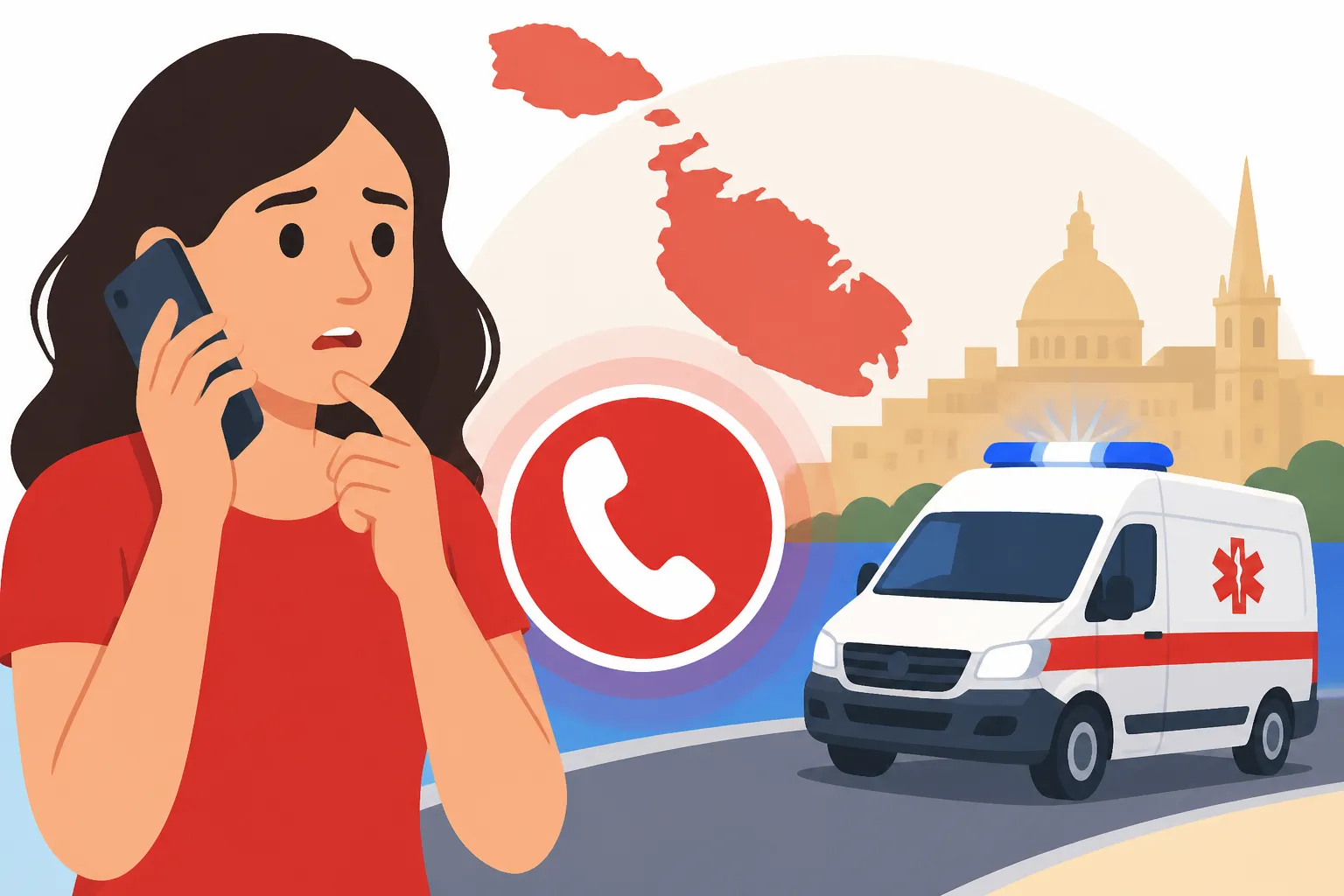
If you are facing a life-threatening emergency in Malta or Gozo, the number you must dial is 112. This is the universal emergency frequency for the entire Maltese archipelago, covering the police, the fire department, and most critically, the ambulance service. It is a free call from any landline or mobile phone, even if you do not have a local SIM card or your credit has run out.
When you dial 112, you are connected to a centralized control room. The operators are bilingual, speaking both Maltese and English fluently. In my experience, they are exceptionally calm, but they will be very direct. Because Malta uses a centralized dispatch system, the person answering might not be a medical professional initially; they are a dispatcher who needs to categorize your emergency quickly to send the right team. You do not need to worry about being misunderstood if you do not speak Maltese, as English is an official language and the standard for emergency services here.
A common point of confusion for newcomers is whether there are separate numbers for different services. While specific police stations or health centers have direct lines, 112 is the only number that can dispatch an emergency ambulance with blue lights and sirens. If you are unsure whether your situation qualifies as a "true" emergency, it is always better to dial 112 and let the dispatcher decide. For more context on how this fits into the broader safety net, you can read about Emergency Medical Care in Malta: 112, A&E, and Urgent Help.
One logistical hurdle newcomers often encounter is the "address problem." Malta is famous for its winding, narrow streets and houses that have names like "Ave Maria" or "The Nest" instead of numbers. If you are in an older part of Birkirkara or Rabat, the dispatcher might ask for a nearby landmark, such as a specific church or a local band club. Being able to identify the nearest "Pjazza" (square) can save precious minutes. Even if you have GPS on your phone, describing the physical surroundings helps the ambulance crew navigate the often-congested Maltese traffic.
What to Expect When the Ambulance Arrives
In Malta, the ambulance service is primarily operated by the government through the Emergency Department at Mater Dei Hospital. These ambulances are staffed by highly trained Emergency Medical Technicians (EMTs) and, in many cases, a specialized emergency doctor or nurse for high-priority calls. When the ambulance arrives, they will perform immediate stabilization on-site. Unlike some countries where the goal is "scoop and run," Maltese paramedics often spend time stabilizing the patient in the vehicle before moving.
If you are on the main island of Malta, the ambulance will almost certainly take you to the Accident & Emergency (A&E) department at Mater Dei Hospital, located in Msida. This is the only acute general hospital on the island equipped to handle major trauma, cardiac events, or complex emergencies. Even if you prefer private care, in a 112 emergency, the public system is the default because it has the most robust life-support infrastructure. You can learn more about this facility in our guide on What to Expect as a Patient at Mater Dei Hospital.
The experience of being in a Maltese ambulance is a masterclass in local geography. Our roads are bumpy and traffic can be intense, especially during the morning "rush hour" that seems to last from 7:00 AM to 10:00 AM. Drivers in Malta generally try to make way for ambulances, but the narrowness of the streets in places like Sliema or St. Julian's can make progress slow. Don't be alarmed by the aggressive use of the siren; it is a necessity here to navigate the dense urban landscape.
For those residing on the sister island, the situation is slightly different. There is a dedicated hospital in Victoria that handles urgent cases. If you find yourself in a crisis there, check out Healthcare in Gozo: Gozo General Hospital and Inter-Island Transfers for specific details on how they handle transfers back to the mainland for specialized surgery via the helicopter service or the Gozo Channel ferry.
The Cost of Emergency Transport and Treatment
A frequent worry for expats is the bill that might arrive after the siren fades. If you are an EU citizen with a valid European Health Insurance Card (EHIC) or a Maltese resident paying social security contributions, the emergency ambulance service and subsequent treatment at Mater Dei are generally free at the point of use. This is part of the state's commitment to public health. However, entitlement is a complex topic that often trips up new arrivals who haven't yet received their eResidence card.
For many digital nomads or those on a temporary stay, having a private backup like SafetyWing is a lifesaver. While 112 will always respond regardless of your insurance status, the "free" aspect only applies if you meet specific residency or treaty criteria. If you are a non-EU national without a work permit, you might eventually receive an invoice for the hospital stay, even if the initial ambulance ride didn't require an upfront payment. SafetyWing can help bridge that gap, providing peace of mind while you navigate the administrative hurdles of Health Entitlement in Malta: How Social Security Contributions Unlock Free Care.
It is a common misconception that you must pay the ambulance driver directly. You will never be asked for cash or a credit card while inside the ambulance. The priority is your health. The billing, if applicable, is handled by the hospital’s administration department at a later date. To understand the financial nuances, it's worth checking Is the 112 Emergency Line in Malta Free to Call? and our deep dive into What Public Healthcare Costs in Malta: Free Services and Paid Extras.
| Service Type | Contact Number | Typical Response | Cost for Residents |
|---|---|---|---|
| Life-Threatening Emergency | 112 | Public Ambulance to Mater Dei | Free |
| Urgent but Non-Critical | 2122 2444 (Health Centres) | Advice or Clinic Visit | Free |
| Private Medical Transport | Private Clinic Number | Scheduled or Private Transfer | Paid / Insurance |
| Minor Injury/Illness | Local Pharmacy | Pharmacist Consultation | Free/OTC Costs |
Private Ambulances and Alternatives to 112
While 112 is for emergencies, there are times when you need an ambulance for non-emergency transport—for example, moving a bedbound relative from a private residence to a clinic or for specialized tests. In these cases, you would not call 112. Instead, you would contact private hospitals or specialized transport providers. Private entities like St. James Hospital or DaVinci Health offer their own ambulance services, but these are paid out-of-pocket or through private insurance.
Many expats choose to maintain private health insurance specifically to avoid the waiting times at the public A&E for non-life-threatening issues. If you have a broken arm or a high fever that isn't a "112 emergency," you might find it faster to take a taxi or a private car to a private clinic. In these scenarios, having a policy like SafetyWing ensures you aren't stuck with a massive bill for private specialist fees. You can find more details on this in our article on Private Healthcare and Insurance in Malta: When You Need Cover.
If the situation is urgent but doesn't require a stretcher and sirens, you should consider the government Health Centres (sometimes called "polyclinics"). These are scattered across the island in towns like Mosta, Paola, and Floriana. They offer walk-in emergency services for minor stitches, x-rays, and acute illnesses. Knowing Which Health Centre Do I Go to After Moving to Malta? can save you from a long, unnecessary wait in the Mater Dei emergency room.
Many newcomers rush to the main hospital for things that could have been handled at a local health center. This puts a strain on the 112 system. However, if you are ever in doubt—if there is chest pain, difficulty breathing, or a serious accident—do not hesitate. Dial 112. The system is designed to catch you when you fall. For a broader look at the network you'll be entering, read Mater Dei and Beyond: A Guide to Malta's Public Hospitals and Health Centres.
Practical Tips for Managing a Medical Crisis in Malta
Preparation is everything when you live on an island where "now" often means "in a little while." New residents should save the 112 number in their phone under "A-Emergency," even though it is short, because panic makes you forget the simplest things. You should also have your ID card or passport number written down and kept in your wallet. When the ambulance crew arrives, they will ask for your identification to start your file in the national health database.
Another tip: if you are living in a block of apartments with a "buzzer" system, make sure your name or apartment number is clearly visible at the entrance. Paramedics often lose time trying to figure out which "Penthouse 5" they are supposed to be entering in a street full of identical-looking blocks. If you can, have someone stand outside the main door to wave the ambulance down. This is a very common practice in Malta and is highly appreciated by the crews.
For those who are still in the process of getting their Maltese paperwork sorted, don't let the lack of an ID card stop you from seeking help. The paramedics are there to save lives, not to check your visa status. However, to understand how you will eventually be integrated into the system, read up on Getting Your Maltese ID Card Number: The Key to Accessing Healthcare. This number becomes your "patient identity" for life in Malta.
Finally, remember that the 112 dispatcher might stay on the line with you until the crew arrives. They can provide instructions for CPR or how to manage a wound. Because Malta is small, an ambulance is usually never more than 10 to 15 minutes away, but those minutes feel like hours. Staying calm and providing a clear "Landmark + Street Name" is your biggest contribution to the rescue. For more on the costs involved if you aren't yet fully "in" the system, see Is Emergency Treatment at Mater Dei Free for Everyone in Malta?
If you are a frequent traveler or a digital nomad, the flexibility of SafetyWing is particularly useful here. Since Malta is a hub for remote workers, having insurance that covers you while you're transitioning between your home country's system and the Maltese state system is crucial. It covers those "grey area" months where you might not yet be entitled to free care but still need the protection of an emergency net. For more on finding a regular doctor for non-emergencies, see our guide on Finding a Doctor in Malta: GPs, Specialists, and the Referral System.
Summary Checklist for Calling an Ambulance in Malta
- Dial 112: Stay on the line; do not hang up until told.
- State Your Language: Say "English" if you prefer it; the dispatcher will accommodate you.
- Provide a Landmark: Give the name of a nearby church, school, or supermarket.
- Identify Yourself: Have your ID card, passport, or EHIC ready for the crew.
- Secure Your Pets: Ensure dogs are in another room before the paramedics enter.
- Expect Mater Dei: Unless you are in Gozo, this is where you are going.
- Check Your Cover: If you are not an EU/Maltese resident, ensure your SafetyWing or other insurance details are accessible for later billing.
If you are currently waiting for your residency to be approved and are worried about access, you might find the answer in Can I See a Doctor in Malta Before My Health Entitlement Is Approved? Taking these small steps now ensures that if you ever have to make that 112 call, you can focus on the patient rather than the paperwork.
Medical Disclaimer
The information provided in this article is for general informational purposes only and does not constitute professional medical advice, diagnosis, or treatment. Always seek the advice of your physician or other qualified health provider with any questions you may have regarding a medical condition. Never disregard professional medical advice or delay in seeking it because of something you have read in this guide. In case of a medical emergency, dial 112 immediately. The author is a lifestyle blogger, not a medical professional or legal expert in Maltese healthcare law. Entitlement to free healthcare is subject to individual circumstances and government regulations.